Introduction
Cardiac surgery represents one of the most sophisticated domains of modern medicine. When a patient faces a diagnosis requiring surgical intervention, the process of selecting a facility and a surgical team is perhaps the most critical decision in their treatment journey. The term Best Heart Surgery Hospitals is often used in search engines, but identifying what makes a facility truly “the best” requires a nuanced understanding of clinical outcomes, infrastructure, and team expertise. Whether you are a patient, a caregiver, or a healthcare professional researching global standards, understanding the variables that influence surgical success is vital. This guide aims to provide an objective framework for evaluating cardiac care centers, with a specific focus on the evolving landscape of heart surgery in India and the factors that influence international patient decision-making.
Why Choosing the Right Heart Surgery Hospital Matters
The quality of a hospital directly influences patient safety and long-term recovery. Cardiac procedures, such as coronary artery bypass grafting (CABG) or complex valve repairs, are highly sensitive to the environment in which they are performed.
- Clinical Outcomes: Hospitals with high patient volumes for specific procedures often report lower mortality and complication rates.
- Advanced Technology: Modern cardiac surgery relies on real-time imaging, robotic assistance, and precision tools.
- Multidisciplinary Teams: A successful surgery is rarely the result of a surgeon alone; it involves perfusionists, cardiac anesthesiologists, intensivists, and specialized nursing staff.
- Infection Control: Strict adherence to sterile protocols in the operating room and cardiac ICU is paramount for preventing post-surgical complications.
What Defines the Best Heart Surgery Hospitals?
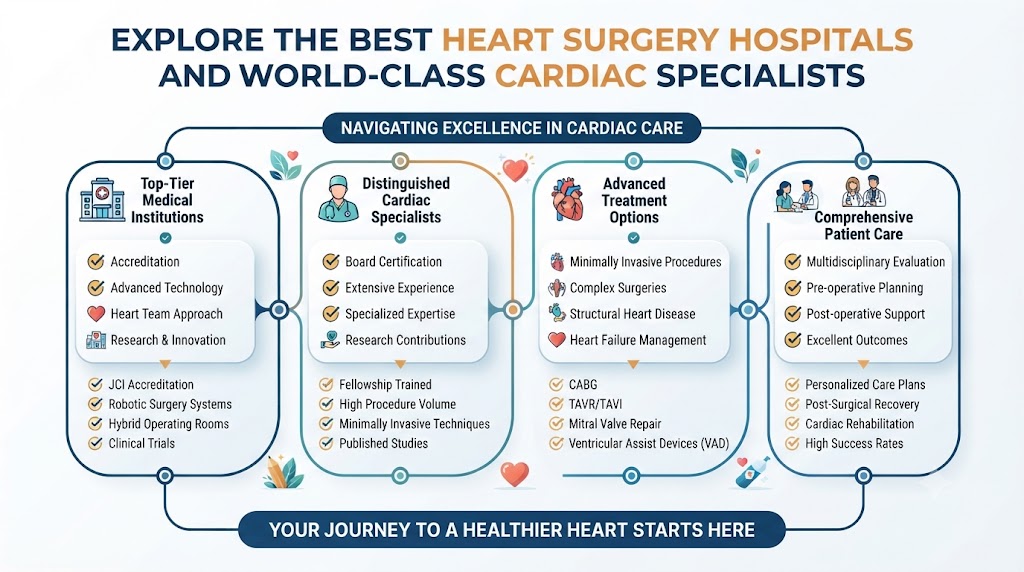
Identifying a top-tier facility involves looking beyond marketing materials. Objective evaluation criteria include:
- Accreditation: Look for globally recognized certifications such as JCI (Joint Commission International) or local national accreditation boards, which signal adherence to rigorous safety standards.
- Hybrid Operating Rooms: These rooms combine traditional surgical environments with advanced diagnostic imaging (like fluoroscopy and CT), allowing surgeons to switch between minimally invasive and open techniques if necessary.
- Specialized Cardiac ICU: A dedicated recovery unit with 1:1 or 1:2 nurse-to-patient ratios, equipped with advanced hemodynamic monitoring systems.
- Emergency Infrastructure: Immediate access to rapid-response teams, advanced life support, and extracorporeal membrane oxygenation (ECMO) capabilities.
Evaluating Cardiac Surgeons: A Framework
While hospitals provide the infrastructure, the best heart surgeons in the world bring the clinical judgment and technical mastery required for success. When evaluating a surgeon, consider the following:
- Surgical Volume: A surgeon who performs a high number of the specific procedure you require is more likely to have mastered the nuances of that technique.
- Board Certification & Fellowship: Ensure the surgeon is board-certified in cardiothoracic or cardiac surgery and has completed advanced fellowship training.
- Research Contributions: Surgeons who actively contribute to peer-reviewed literature are often at the forefront of surgical innovation and evidence-based practice.
- Communication Style: Does the surgeon explain the risks, benefits, and alternatives clearly? A patient-centered approach is essential for informed decision-making.
The Landscape of Heart Surgery in India
Heart surgery in India has gained global recognition for combining world-class clinical expertise with cost-efficiency. The nation’s healthcare ecosystem includes a robust network of private institutions that compete globally in terms of outcomes and technological adoption.
Many of the best heart surgeons in India have trained or practiced in prestigious institutions in the UK, USA, or Europe, bringing international best practices back to their home institutions. This cross-pollination of knowledge has elevated the standard of care to levels comparable to top-tier Western facilities.
Understanding Heart Surgery Cost in India
One of the primary drivers of medical tourism for cardiac care is the significant difference in procedural costs. However, it is essential to realize that costs are not uniform.
| Category | Typical Inclusions | Variable Factors |
| Diagnostics | ECG, Echo, Angiography, Blood work | Complexity of disease |
| Surgery | Surgeon fees, Anesthesia, OT charges | Technique (Robotic vs. Open) |
| Hospital Stay | ICU stay, Ward bed, Nursing, Consumables | Length of stay |
| Recovery | Medications, Physiotherapy, Follow-up | Comorbidity management |
Note: All prices are estimates and vary significantly based on the specific hospital, city, and patient medical history.
Bypass Surgery Cost and Considerations
Bypass surgery cost in India is frequently researched because it is a life-saving procedure that can be prohibitively expensive in other parts of the world.
- Technique Variation: Traditional CABG (on-pump) versus off-pump (beating heart) or robotic-assisted CABG will impact the final cost.
- Recovery Timeline: While the cost covers the surgery, patients must also budget for recovery time, including potential cardiac rehabilitation sessions.
- Best hospitals for bypass surgery: When researching, focus on hospitals that report their CABG success rates and have robust cardiac rehabilitation programs.
Heart Valve Replacement: Costs and Techniques
Heart valve replacement surgery cost in India depends largely on the type of valve used (biological vs. mechanical) and the surgical approach (minimally invasive vs. open sternotomy).
- TAVR (Transcatheter Aortic Valve Replacement): This is a less invasive option for suitable candidates, though the cost of the valve device itself is higher.
- Valve Repair: Whenever possible, surgeons prefer to repair the native valve rather than replace it, which may alter the surgical approach and overall cost structure.
Specialized Cardiac Centers
Best Hospitals for Minimally Invasive Heart Surgery
Minimally invasive techniques offer reduced pain and faster recovery times. Top facilities for these procedures utilize specialized port-access systems and endoscopic tools that require advanced surgical skill sets.
Best Hospitals for Pediatric Cardiac Surgery
Pediatric heart surgery is highly specialized. The best centers maintain dedicated pediatric cardiac ICUs (PICU), staffed by neonatologists and pediatric cardiac surgeons who specialize in repairing congenital heart defects in infants and children.
Expert Insight: Always verify that a hospital’s pediatric unit is integrated into a comprehensive children’s hospital or has a long-standing history of treating pediatric congenital conditions.
Medical Tourism for Cardiac Care
Traveling for surgery requires meticulous planning. If you are considering medical tourism, ensure the following are addressed:
- Documentation: Secure all medical reports, digital copies of imaging (DICOM files), and a referral letter from your local cardiologist.
- International Patient Departments (IPD): Most leading hospitals in India have dedicated teams to handle visa assistance, airport transfers, and interpreter services.
- Follow-up Coordination: Before leaving the country, ensure there is a clear plan for post-operative follow-up with your local doctor, coordinated with the surgical team.
For individuals seeking an educational starting point, resources like BestHeartSurgery.com can provide further context on how to vet facilities.
Future Trends in Cardiac Surgery
The field is rapidly evolving with technologies that improve precision and patient outcomes:
- Robotic Heart Surgery: Greater dexterity and smaller incisions reduce post-operative pain.
- AI-Assisted Diagnosis: Machine learning algorithms help analyze complex imaging to predict outcomes and optimize surgical paths.
- 3D Surgical Planning: Using patient-specific 3D printed models to plan complex repairs before entering the operating room.
- Remote Monitoring: Wearable technology allows surgeons to monitor a patient’s recovery metrics in real-time, even after they have returned home.
Frequently Asked Questions (FAQ)
- How do I verify a heart surgeon’s credentials?Check their board certifications, hospital affiliations, and look for their research profile on databases like PubMed.
- Is cardiac surgery in India safe for international patients?Yes, provided you choose JCI-accredited hospitals and conduct thorough research on the surgical team’s experience.
- What is the difference between open and off-pump bypass?Open surgery uses a heart-lung machine; off-pump surgery is performed on the beating heart, potentially reducing inflammatory response.
- Are robots better than surgeons?No, robots are tools controlled by the surgeon. They offer enhanced precision but the surgeon’s experience remains the most important factor.
- How long is the typical recovery after heart surgery?It varies by procedure, but typically involves 4–8 weeks for initial recovery and 3–6 months for full activity resumption.
- Can I get a cost estimate before traveling?Yes, most hospitals provide an estimated treatment plan after reviewing your medical reports.
- What should I pack for my recovery?Follow the hospital’s specific post-operative guide, which usually includes comfortable clothing and necessary medications.
- How do I handle follow-up care back home?Ensure your local doctor has a detailed discharge summary from the surgical team.
- What is a “Hybrid OR”?A surgical suite that combines standard surgical tools with advanced imaging equipment like cath labs.
- Does insurance cover medical tourism?Coverage varies significantly; check with your insurance provider regarding international coverage policies.
Key Takeaways
- Objective Criteria: Prioritize JCI/national accreditation, surgeon volume, and hospital infrastructure over marketing.
- Informed Decision: Always obtain second opinions and ensure you have a clear understanding of the risks versus benefits.
- Cost Management: While India offers cost-effective care, ensure that the budget accounts for travel, recovery, and long-term follow-up.
- Integration: A great surgery is only one part of the journey; post-operative care and rehabilitation are equally vital.
Conclusion
Choosing a facility for cardiac surgery is a complex decision that demands careful, evidence-based research. By focusing on surgeon experience, hospital infrastructure, and standardized accreditation, patients can navigate their options with greater confidence. Whether you are exploring treatment options in your home country or considering the benefits of heart surgery in India, the goal remains the same: ensuring the highest quality of care for a healthy future.