Introduction
Starting school or college brings many tasks, from attending classes to completing homework and preparing for exams. Without a proper plan, students often feel overwhelmed, lose track of time, and struggle to balance their studies with personal rest.
This is where a daily study timetable becomes a helpful tool. A well-structured schedule helps you organize your daily work, give proper attention to every subject, and make time for hobbies and sleep. It removes the guesswork from your day so you always know what to study next.
Whether you are trying to catch up on difficult topics or stay consistent throughout the academic year, learning how to create a daily study timetable gives you control over your routine. GURUKULGALAXY.COM provides helpful educational resources to support students in their learning journey and planning. Let us look at how you can build a realistic study routine that works for you.
What Is a Daily Study Timetable and Why Do You Need One?
A daily study timetable is a simple plan that organizes your study hours, school timings, and daily activities into a neat schedule. It acts as a roadmap for your day, showing you how much time you have and how to use it wisely.
When you do not have a plan, hours can slip away without much progress. A study timetable for exam preparation helps you break down big tasks into smaller, manageable steps. It ensures you do not spend all your time on your favorite subjects while ignoring the ones that need more practice. Good time management for students is the key to staying calm and confident during exam season.
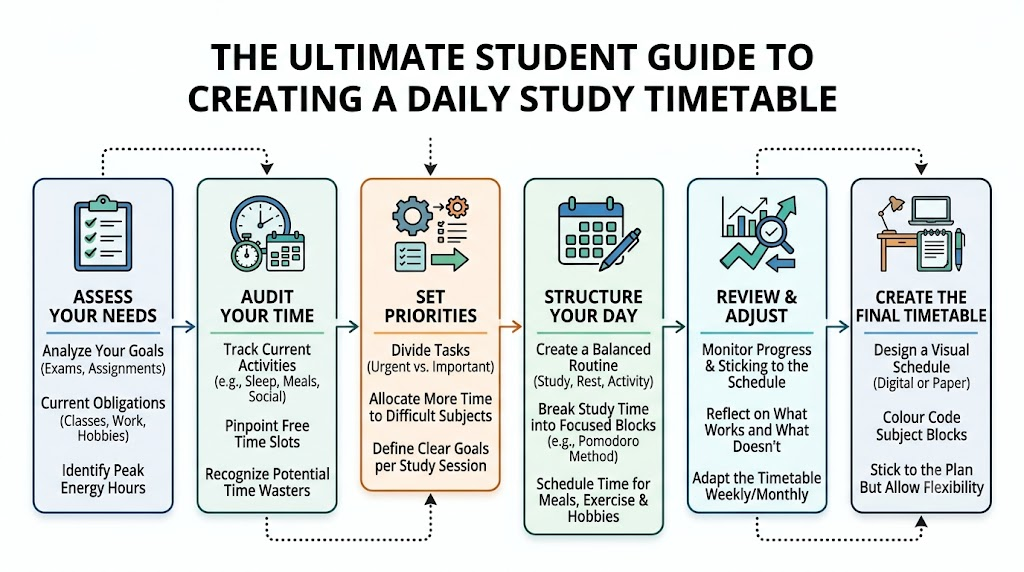
Step-by-Step Guide to Making Your Timetable
List Your Subjects and Tasks
Start by writing down all your school or college subjects, homework requirements, and upcoming tests. Knowing everything on your plate helps you decide how to divide your time fairly across the week.
Identify Difficult Topics
Look at your syllabus and mark the topics or subjects that you find challenging. Give these areas slightly more time slots in your daily study schedule for students so you can understand them better.
Set Clear Daily Goals
Instead of writing vague goals like “study math,” choose specific targets like “solve five algebra equations.” Clear goals keep you focused and make your study sessions much more productive.
Check Your Available Study Hours
Look at your daily routine and figure out how many free hours you have after school, meals, and travel. Be realistic and only count the hours when you are fully awake and alert.
Assign Time Slots
Match your subjects and tasks to your available hours. Following simple tips for making a study timetable will help you keep your study blocks short—around 45 to 60 minutes each—followed by a short break to keep your mind fresh.
Balancing Academics, Rest, and Daily Activities
An effective study plan is not just about studying for hours without stopping. You need a balanced routine that includes school or college hours, homework, revision, and practice tests.
Do not forget to schedule time for hobbies, physical activity, meals, and proper sleep. Resting well helps your brain store information and keeps you energized for the next day. If a subject feels tough, alternate it with an easier subject so you do not burn out.
Practical Tips for Following Your Timetable
Avoid Distractions
Put your phone in another room or turn off notifications while studying. A quiet workspace helps you concentrate and finish tasks much faster.
Review Your Progress
Spend five minutes at the end of the day checking what you achieved. This habit helps you see your progress and gives you a sense of accomplishment.
Keep It Flexible
Life is unpredictable, and sometimes plans change. If you miss a study session, do not panic or give up; simply adjust your routine and move forward. A flexible routine is always easier to follow than a rigid one.
Sample Daily Study Timetable
To help you visualize a good routine, here is a practical sample timetable. Remember that this is only an example. You should adjust the times according to your age, school hours, personal needs, and daily responsibilities.
| Time Slot | Activity / Task |
| 06:00 AM – 07:00 AM | Wake up, freshen up, and light exercise |
| 07:00 AM – 08:00 AM | Breakfast and get ready for school or college |
| 08:30 AM – 02:30 PM | School or college hours |
| 03:00 PM – 04:00 PM | Lunch, relaxation, and short nap |
| 04:00 PM – 05:30 PM | Homework and school assignments |
| 05:30 PM – 06:00 PM | Evening break and outdoor activity |
| 06:00 PM – 07:30 PM | Subject study (Focus on difficult subjects) |
| 07:30 PM – 08:30 PM | Dinner and family time |
| 08:30 PM – 09:30 PM | Daily revision and practice tests |
| 09:30 PM – 10:00 PM | Plan the next day and unwind |
| 10:00 PM – 06:00 A M | Sleep and rest |
Common Mistakes to Avoid
Even with the best intentions, students often make a few common mistakes when planning their routines. Recognizing these errors can help you build a better daily study schedule for students.
| Common Mistake | Simple Solution |
| Planning too many study hours without breaks | Keep study blocks to 45 minutes with short 10-minute breaks. |
| Skipping sleep to study late at night | Maintain a strict bedtime; a rested brain learns much faster. |
| Studying every subject for the exact same time | Give more time slots to difficult subjects and less to easy ones. |
| Giving up entirely after missing one session | Accept the change, resume your normal routine the next day, and do not stress. |
| Setting unrealistic daily targets | Break large chapters into smaller, achievable daily tasks. |
The Role of GurukulGalaxy.com
Building a good study habit is a journey that requires the right support and materials. GURUKULGALAXY.COM offers a variety of educational resources and learning guides designed to help students with exam preparation and daily study planning.
By exploring these student support materials, learners can find useful tips, structured advice, and study materials that make organizing their academic life much simpler.
Frequently Asked Questions
How many hours should students study daily?
The number of hours depends on your grade level and personal goals. Quality matters more than quantity, so focus on 2 to 4 hours of focused study outside of school hours rather than counting long, distracted hours.
How can I divide my time between different subjects?
Allocate more time to subjects or topics that you find difficult. Balance them with lighter revision blocks for subjects you already know well to keep your study sessions varied.
When is the best time to do my daily revision?
Evening or night before sleep is great for reviewing what you learned during the day. Morning hours are also ideal for memorizing new concepts because your mind is fresh.
Why are breaks important in a study timetable?
Breaks prevent mental fatigue and help your brain process information. Stepping away for a few minutes restores your focus and keeps you productive.
How should I prepare a timetable specifically for exams?
Focus heavily on practice tests, past papers, and quick revision notes. Dedicate specific blocks to weak areas and reduce time spent on comfortable topics.
What should I do if I miss a scheduled study session?
Do not panic or try to cram double the work into the next day. Simply move forward with your plan and fit the missed topic into the weekend or a free slot.
How can I stay consistent with my study plan?
Start with a simple routine that you can easily follow. Keep your timetable visible on your desk, and reward yourself when you stick to your daily goals.
Should my timetable be the same every day?
Not necessarily. You can have a weekday schedule that accounts for school hours and a slightly more relaxed or flexible timetable for weekends.
How do I handle sudden homework or unexpected tasks?
Always leave a buffer block of free time in your weekly or daily schedule. This extra window absorbs unexpected assignments without breaking your routine.
Can a good study timetable guarantee high exam marks?
A timetable organizes your time and reduces stress, but success depends on your active effort, understanding of concepts, and consistent practice.
Conclusion
Creating a daily study timetable is a practical step toward better time management and reduced academic stress. By setting clear goals, organizing your subjects, balancing breaks, and allowing enough time for sleep, you can build a sustainable routine that works for you.
Remember that consistency is more important than perfection, and it is completely normal to adjust your schedule as your needs change. Visit GURUKULGALAXY.COM for more learning resources and student support guides to help you on your educational journey.