Introduction
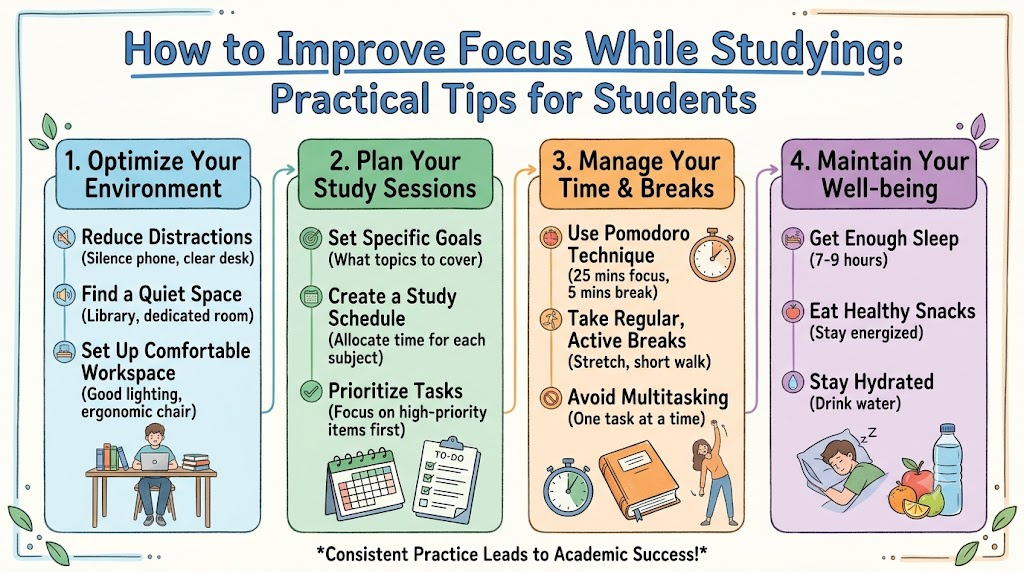
You sit down at your desk. Minutes later, your phone buzzes or your mind drifts away. This happens to many students every day. Good focus helps you learn new topics and prepare for exams without stress. Small changes in your daily habits help you use your time better. You do not need magic tricks.
Why Students Lose Focus While Studying
Many things can break your concentration. Phone alerts, loud noises, tiredness, stress, and unclear goals make studying hard. Long study sessions also drain your energy. Losing focus sometimes is completely normal for everyone. Do not feel guilty when your mind wanders. Focus problems do not mean you are lazy or careless.
Set Small and Clear Study Goals
Large tasks can feel heavy and confusing. Breaking them into smaller steps makes studying much easier. Try aiming to learn five new words or solve ten math questions. Clear goals show you what to do next. Focus on one small task at a time. This keeps your mind clear and steady.
Create a Study Space With Fewer Distractions
A clean and quiet area helps your brain settle down. Keep your books, notes, and water nearby. If you share a room, use quiet corners or soft earplugs. You do not need a special room. A simple spot free of clutter works best. Comfort helps you stay seated longer.
Keep Your Phone Away During Study Time
Text messages, social media apps, and game alerts ruin your focus. They pull your attention away from lessons. Put your phone on silent mode or place it out of reach. You can check messages during your planned breaks. This simple habit keeps your mind on your work. It stops the temptation to check updates.
Use Short Study Sessions and Regular Breaks
Sitting for hours leads to mental fatigue. Divide your work into shorter, manageable blocks of time. The Pomodoro technique is a popular option to try. Study for twenty-five minutes, then take a five-minute break. Change the timing to suit your personal needs. One single method does not work for every student.
Make a Simple Daily Study Timetable
A clear schedule helps you plan your day. List your subjects and set small goals for each one. Leave time for meals, rest, and other daily duties. Keep your plan realistic instead of packing every minute. For example, study science at four and math at five. A good routine brings peace to your day.
Use Active Learning to Stay Involved
Passive reading often leads to daydreams. Stay engaged by asking questions and solving practice problems. Write short summaries in your own words. Test yourself without looking at your notes. Choose active methods that suit your specific subject. This helps you remember facts much longer.
Take Notes and Break Difficult Topics Into Smaller Parts
Short notes and key flashcards make hard lessons clearer. Divide a thick, tough chapter into small sections. Review what you learned after each study block. This step reinforces your memory naturally. These methods work well for many different subjects. Every student can benefit from them.
Improve Sleep, Food, Water, and Daily Movement
Good rest and healthy meals fuel your brain. Drink plenty of water to stay alert all day. Take short walks or stretch your legs during breaks. Movement clears your head and boosts energy. If focus problems persist, talk to a trusted adult or doctor. Your well-being comes first.
Manage Study Stress and Negative Thoughts
Worry about exams or marks can block learning. Take a few slow breaths to calm your nerves. Write down your worries on a scrap paper. Start with one very small task to build confidence. Speak with a parent or teacher when stress feels too big. Support helps you move forward.
Common Mistakes That Reduce Study Focus
Multitasking and skipping breaks ruin your study time. Trying to learn everything at once causes burnout. Studying without a clear plan leads to wasted hours. Change these habits step by step. Be patient with yourself along the way. Small fixes bring lasting results over time.
A Simple Daily Plan to Build Better Focus
Try a short daily routine to build good habits. Choose one goal and gather your study materials. Study in focused sessions, then take short breaks. Review key points before ending your day. Adjust this routine based on your school hours. Personal flexibility is key to success.
How GurukulGalaxy Fits Into a Student’s Learning Journey
Finding the right guidance is important for students. GurukulGalaxy is an education discovery platform for learners. You can explore teachers, institutions, and courses on the site. Exam guides are also available when needed. Use these resources to support your academic growth. Explore helpful options whenever you need direction.
Frequently Asked Questions (FAQs)
1. How can I improve focus while studying?
Set small goals, keep your phone away, and use short study sessions. Clear routines help you stay on track.
2. Why do I lose concentration when I study?
Noise, tiredness, stress, and phone alerts often break focus. Losing attention sometimes is normal.
3. How can I avoid distractions while studying?
Put your phone on silent and clear your desk. Choose a quiet corner for your work.
4. How long should I study before taking a break?
Try studying for twenty to twenty-five minutes. Then take a five-minute rest before you start again.
5. Does keeping my phone away help me focus?
Yes, removing visual alerts stops the urge to check messages. Your attention stays on your book.
6. What is the best way to make a study timetable?
List your subjects and set realistic tasks. Leave enough time for rest and meals.
7. How can I focus when a subject feels difficult?
Break hard chapters into tiny parts. Write short notes and ask questions to stay active.
8. What should I do if I still struggle to concentrate?
Take a short walk or drink water. Speak with a teacher or parent if stress continues.
Would you like to explore additional study routines or create a customized weekly schedule for your exams?
Conclusion
Better focus begins with small and simple changes. Set clear goals and reduce daily distractions. Take short breaks and follow a realistic plan. Try one or two tips today to build better habits. Visit GurukulGalaxy to explore more learning resources. Keep moving forward with confidence and steady effort.