Introduction
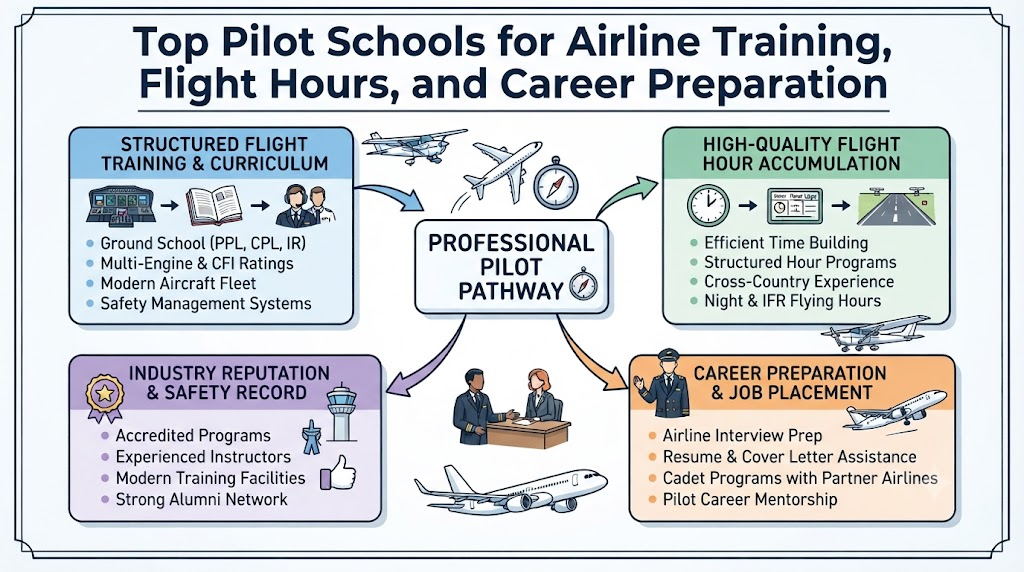
Embarking on a journey toward an aviation career is an exciting milestone. Choosing a pilot school is one of the most critical career decisions an aspiring aviator will ever make, as it shapes both technical competence and long-term professional habits. Flight training is a rigorous blend of academic knowledge and practical flying, requiring students to master complex aeronautical concepts while developing precise motor skills in the cockpit. Because training institutions vary widely in their teaching methods, fleet conditions, and operational environments, students must compare their options carefully. Understanding course structures, instructor experience, aircraft maintenance standards, training facilities, and regulatory requirements helps candidates make informed choices. Ultimately, aligning personal career goals with the right training program provides a solid foundation for professional success in the global aviation industry.
What Makes a Good Pilot School?
Evaluating a training institution requires looking closely at the core elements that drive quality education. Qualified flight instructors are essential because mentorship directly influences pilot proficiency, decision-making, and safety awareness. A reliable institution maintains well-equipped training aircraft and flight simulators where available, ensuring students experience realistic operational scenarios. Comprehensive ground school prepares candidates for written examinations by breaking down aerodynamics, navigation, and systems management.
A strong safety culture and strict maintenance standards are non-negotiable markers of a credible organization. Training facilities should offer comfortable learning environments, while transparent student support and effective flight scheduling prevent unnecessary delays in training progression. Regulatory compliance ensures that the curriculum meets all necessary legal standards for licensing. Additionally, maintaining clear training records allows instructors and students to track progress accurately. When looking for the best pilot schools, candidates should prioritize safety, transparency, and teaching quality over flashy marketing or oversized promises.
How to Find the Best Flight Schools
Researching and comparing options effectively requires a structured approach. Aspiring aviators should look closely at the types of pilot licenses offered and verify whether the curriculum aligns with their ultimate career aspirations. Investigating the aircraft fleet, instructor qualifications, and average flight hours required to complete various stages of training helps clarify expectations. Access to modern flight simulators allows students to practice emergency procedures and instrument flying in a controlled setting.
Environmental factors also matter greatly. Local weather conditions, airport traffic density, and airspace complexity directly affect flight scheduling and the overall learning pace. Furthermore, students should evaluate training costs realistically, keeping in mind that hidden fees for landing charges, exam bookings, and equipment can accumulate. Those who require accommodation should check whether student housing or local support is available. Before enrolling anywhere, students must verify current regulatory and licensing requirements with the relevant aviation authority to ensure the chosen institution holds all necessary approvals.
Choosing the Best Commercial Pilot Training Schools
Planning a professional aviation career requires specialized instruction designed to turn hobbyist flyers into competent professionals. When evaluating the best commercial pilot training schools, students should examine the depth of the commercial pilot curriculum. This includes advanced ground school, complex navigation techniques, aviation meteorology, aircraft systems, and human factors psychology.
Professional training must also cover effective radio communication, detailed flight planning, and multi-engine or instrument training where applicable. Thorough examination preparation ensures students are ready for rigorous theoretical and practical assessments. It is important to remember that rigorous training builds competence, but it does not guarantee airline employment or specific career outcomes. Market conditions, individual performance, and airline hiring criteria always play a major role in ultimate career placement.
What Makes the Best Pilot Schools in the World Different?
Globally recognized training institutions often stand out due to their comprehensive infrastructure, established regulatory environments, and diverse fleet availability. High international standards typically mean rigorous instructor oversight, advanced simulator technology, and robust safety systems. Some institutions benefit from direct industry partnerships or exposure to international training environments, which can help students adapt to various airspace structures.
However, the definition of excellence varies widely. What makes the best pilot schools in the world different for one student might not matter to another. The right choice ultimately depends on an individual’s specific career goals, budget, geographic location, preferred licensing pathway, and personal lifestyle plans. Rather than relying on popular global rankings, students should focus on finding an environment that matches their individual learning style and professional ambitions.
Understanding Commercial Pilot Training
Commercial pilot training takes a student beyond the basics of private flight and introduces the disciplines required of a working aviator. The process combines intensive ground instruction with structured flight training covering advanced navigation, weather interpretation, complex aircraft operations, and precise instrument procedures.
Students learn how to manage abnormal situations, communicate clearly with air traffic control, and execute precise flight maneuvers under various conditions. Regular examinations and practical stage checks assess whether the student meets the high standards required for commercial operations. Requirements can vary significantly depending on the aviation authority and the legal jurisdiction under which the training is conducted, making it essential to understand local regulatory frameworks from the start.
What Is a Pilot Training Academy?
A pilot training academy is a specialized educational provider focused on delivering structured, immersive aviation instruction. Unlike traditional flying clubs that cater primarily to recreational pilots, an academy often operates on a structured schedule designed to take students from zero experience to professional qualification efficiently.
These programs integrate ground school, simulator sessions, and flight training into a unified curriculum. Instructor-led learning, regular progress evaluations, and career-oriented training help maintain momentum. The immersive nature of an academy helps students build discipline, professional habits, and teamwork skills that mirror the demands of modern commercial flight decks.
How to Evaluate the Best Flying Schools
Comparing multiple flying schools requires a careful look at operational day-to-day realities. Aircraft availability is a vital metric; a school with too many students and too few airplanes will lead to frustrating scheduling bottlenecks and extended training timelines. Inspecting aircraft maintenance standards ensures that safety remains the top priority.
Students should also consider the instructor-to-student ratio to ensure they receive personalized attention and constructive feedback. The surrounding training environment, including local airport traffic and weather patterns, impacts how quickly a student gains confidence. Independent student reviews and transparent training costs help form a realistic picture of what to expect. Avoiding institutions that rely entirely on promotional claims protects students from unexpected financial and educational surprises.
Choosing an Airline Pilot Training Academy
Preparing for a career in commercial passenger or cargo transport requires an academy that emphasizes multi-engine operations, advanced instrument flying, and crew resource management. Aspiring airline pilots need training that mirrors commercial cockpit environments, focusing on standard operating procedures, leadership, and professional communication.
An airline pilot training academy should instill deep aviation safety awareness and decision-making frameworks. While these specialized academies provide the essential skills and ratings required for professional flying, students should keep realistic expectations. No academy can promise guaranteed airline placement, immediate interviews, or specific employment outcomes, as airline hiring depends heavily on broader industry cycles and individual performance.
How to Identify the Best Aviation Academy for Pilot Training
Finding the right aviation academy involves weighing institutional credentials against personal needs. Key indicators of quality include formal regulatory approvals, highly experienced instructor rosters, modern training aircraft, and reliable simulator availability. A strong safety culture and transparent fee structures are also essential.
Students should review the curriculum, student support services, and typical training timelines to see if they align with personal availability and financial resources. Because the best aviation academy for pilot training depends heavily on individual circumstances and local authority rules, candidates should thoroughly research multiple options before making a commitment.
Understanding Commercial Pilot License Training
Before embarking on commercial pilot license training, candidates must understand the administrative and medical prerequisites involved. This includes obtaining the correct aviation medical certification, which ensures physical and mental fitness for professional flight duties.
The training journey involves mastering extensive ground subjects, completing required flight hours, passing rigorous written examinations, and successfully completing practical flight tests with authorized examiners. Maintaining accurate personal documentation and fulfilling every mandate set by the licensing authority is vital for a smooth transition from student to licensed professional.
Important Factors to Consider Before Enrolling
Committing to flight training requires careful financial and personal planning. Students must evaluate total estimated costs, factoring in aircraft rentals, instructor fees, landing fees, aviation gear, exam fees, and living expenses if relocating. Training location, local weather patterns, and accommodation availability also play major roles in whether training stays on schedule.
Understanding maintenance arrangements is crucial to prevent unexpected downtime. Furthermore, students should carefully review refund and cancellation policies in case personal or financial circumstances change. Recognizing the full financial and time commitment before enrollment helps prevent unfinished training and unnecessary stress.
How to Prepare for Pilot Training
Understand the Licensing Pathway
Knowing which aviation authority regulates your training ensures that every flight hour and ground school hour counts toward your ultimate career credentials.
Review Academic Requirements
Aviation theory involves physics, mathematics, and geography. Strengthening these academic foundations early makes ground school much more manageable.
Understand Medical Requirements
Securing the appropriate aviation medical certificate early in the process prevents investing time and money into a path that may have physical disqualifications.
Build Strong Aviation Fundamentals
Familiarizing yourself with basic meteorological concepts, aerodynamics, and navigational charts gives you a helpful head start before official training begins.
Develop Communication Skills
Clear, concise verbal communication is a core safety requirement in aviation. Practicing active listening and professional phrasing builds great habits.
Prepare Financially
Creating a comprehensive budget that covers tuition, materials, living costs, and unexpected overages ensures financial stability throughout the program.
The Role of Flight Instructors in Pilot Training
The quality of instruction shapes every aspect of an aviator’s career. Exceptional flight instructors do more than just guide students through maneuvers; they teach critical thinking, foster a safety-first mindset, and provide honest, constructive feedback.
Great instructors help students analyze their mistakes, build emotional resilience, and develop sound decision-making habits under pressure. Good pilot training is never just about logging hours to pass a test; it is about building the discipline and safe operational practices required to handle unpredictable situations in the sky.
Why Safety Culture Matters in Flight Training
An organization’s safety culture reveals its true character. Key indicators include meticulous aircraft maintenance, rigorous pre-flight inspection routines, and operational discipline regarding weather minimums.
When instructors and school management encourage open reporting of safety events and mistakes without fear of unfair punishment, learning happens safely. Prioritizing risk management and emergency preparedness from day one ensures that students develop habits that protect them throughout their entire aviation careers.
How BestPilotsSchool.com Can Help
Researching the vast landscape of aviation education can feel overwhelming for newcomers. Platforms like BestPilotsSchool.com serve as useful resources for individuals exploring pilot schools, flight schools, commercial pilot training, and aviation academies.
By offering structured insights into pilot training academies, airline pilot training options, and commercial pilot license training, the platform helps aspiring aviators navigate their options more effectively. Keeping research organized allows students to compare different educational models and aviation education paths with clarity and confidence, ensuring they find a program that suits their personal goals.
Common Mistakes to Avoid When Choosing a Pilot School
- Choosing a school strictly because of the lowest advertised tuition fees.
- Relying entirely on flashy promotional advertising without independent verification.
- Ignoring whether the institution holds proper regulatory approvals.
- Failing to check the ratio of students to available aircraft.
- Overlooking hidden costs such as examination fees and equipment rentals.
- Not inquiring about aircraft maintenance schedules and fleet reliability.
- Assuming all flight schools offer the same quality of instruction.
- Selecting a licensing pathway without understanding its local applicability.
- Expecting guaranteed employment or automatic job placement upon graduation.
- Overlooking refund policies and cancellation terms in the training agreement.
Technology in Modern Pilot Training
Modern aviation education benefits greatly from technological integration. Advanced flight simulators allow students to practice emergency procedures, instrument approaches, and system failures safely and cost-effectively.
Digital learning platforms, electronic flight bags, and aviation training software help students visualize complex aerodynamics and flight planning routes. While simulation technology provides invaluable practice, it complements rather than replaces real-world flight experience in actual aircraft.
Career Opportunities After Pilot Training
Earning a commercial pilot license opens doors to diverse professional pathways. Beyond traditional airline pilot roles, qualified aviators find opportunities in regional charter operations, cargo transport, corporate aviation, flight instruction, and specialized aerial work.
Career progression depends on a combination of licensing levels, total flight hours, specialized ratings, prevailing economic conditions, and adherence to aviation authority regulations. Navigating this industry successfully requires patience, adaptability, and continuous professional development.
Future of Pilot Training and Aviation Education
Aviation education continues to evolve alongside technological and operational advancements. Future trends point toward more sophisticated flight simulation, data-assisted performance tracking, and competency-based training methodologies.
Greater emphasis on human factors, modern cockpit automation, and sustainable aircraft technologies will shape the next generation of aviators. Staying informed about these developments helps students prepare for a dynamic and technologically advanced professional environment.
Conclusion
Choosing a pilot school requires thorough research, realistic budgeting, and a clear understanding of your long-term career aspirations. Prioritizing training quality, safety culture, and institutional transparency helps ensure a productive educational experience.
Students should carefully compare aircraft fleets, instructor experience, facilities, curriculum structures, and regulatory requirements before making a decision. Verifying current licensing rules with the appropriate aviation authority is an essential final step. Resources like BestPilotsSchool.com can assist future aviators in exploring pilot schools and comparing aviation training options as they take their first steps toward a rewarding career in the skies.