Introduction
Navigating urological health concerns often begins with finding reliable information about treatment options, qualified specialists, and appropriate healthcare facilities. Whether a person is researching symptoms related to urinary tract conditions, kidney stones, or prostate health, understanding the path from diagnosis to recovery is essential. UrologyHospitals.com serves as an educational resource to help patients and their families understand urological healthcare, explore treatment pathways, and navigate the process of finding specialized care. This guide covers fundamental urological conditions, diagnostic procedures, treatment approaches, specialist roles, and practical considerations for selecting a urology hospital.
Understanding Urology and Patient Care
Urology is a medical specialty focused on the urinary tract in both men and women, as well as the male reproductive system. The organs involved include the kidneys, ureters, bladder, urethra, and the male reproductive organs, which encompass the prostate, testes, and penis. Because these systems manage vital bodily functions such as filtration, waste elimination, and reproduction, disorders affecting them can significantly impact overall well-being. Medical evaluation becomes necessary when urinary or reproductive symptoms persist, cause discomfort, or disrupt daily life. Specialized urological care ensures that conditions are properly diagnosed using evidence-based methods, ranging from conservative monitoring and medication to minimally invasive interventions and advanced surgical procedures. Understanding available treatment options helps individuals make informed decisions alongside qualified healthcare professionals.
Common Symptoms and Warning Signs
Urological conditions manifest through various physical signs. Recognizing these indicators early can lead to timely medical evaluation and appropriate management. Common symptoms include:
- Pain or burning during urination: Discomfort or a stinging sensation while passing urine often indicates inflammation or infection.
- Frequent or urgent urination: Needing to urinate more often than usual or experiencing a sudden, intense urge to go can point to bladder issues, prostate enlargement, or urinary tract infections.
- Blood in the urine (hematuria): The presence of pink, red, or cola-colored urine requires prompt medical assessment to rule out stones, infections, or other underlying abnormalities.
- Difficulty urinating: Straining, a weak urinary stream, or the inability to empty the bladder completely can signal obstruction or prostate-related changes.
- Lower abdominal or pelvic discomfort: Persistent pressure or ache in the lower abdomen, groin, or pelvic region can be associated with various urological disorders.
- Changes in urinary habits: Sudden alterations in frequency, nighttime waking to urinate (nocturia), or urinary leakage.
These symptoms are not exclusive to a single condition and can overlap across multiple urological disorders. A comprehensive evaluation by a specialist is required to determine the underlying cause.
Causes and Risk Factors
Urological conditions arise from a diverse combination of anatomical, genetic, lifestyle, and environmental factors. While some conditions develop due to age-related changes, others are influenced by underlying health status or external exposures. Distinguishing among these factors helps in understanding individual risk profiles:
- Age and Gender: Certain conditions, such as prostate enlargement, become more common as men age, while urinary tract infections occur more frequently in women due to anatomical differences.
- Genetics and Family History: A family history of conditions like kidney stones, prostate cancer, or bladder disorders can increase individual risk.
- Lifestyle Factors: Inadequate hydration, diets high in sodium or oxalate, smoking, and physical inactivity can influence the development of kidney stones, bladder conditions, and certain urological cancers.
- Medical Comorbidities: Conditions such as diabetes, hypertension, and obesity can affect urinary tract health and kidney function over time.
Diagnosis and Medical Evaluation
Accurate diagnosis forms the foundation of effective management. Urologists employ a structured approach to evaluate symptoms and identify specific conditions. Depending on the clinical presentation, diagnostic methods may include:
- Medical History and Physical Examination: Reviewing symptoms, medical history, and performing targeted physical assessments, such as digital rectal examinations when evaluating prostate health.
- Laboratory Testing: Analyzing urine samples (urinalysis and urine culture) to detect infection, blood, or markers of disease, alongside blood tests such as prostate-specific antigen (PSA) testing or kidney function panels.
- Imaging Studies: Utilizing ultrasound, computed tomography (CT) scans, or magnetic resonance imaging (MRI) to visualize the kidneys, bladder, ureters, and surrounding structures.
- Cystoscopy: Inserting a thin, lighted scope through the urethra to examine the interior lining of the bladder and urethra directly.
- Urodynamic Testing: Assessing how well the bladder and urethra store and release urine, helping identify functional abnormalities.
Each diagnostic tool serves a specific purpose in clarifying the diagnosis, ensuring that treatment plans align with clinical findings.
Urology Treatment Options
Treatment strategies vary widely depending on the specific diagnosis, disease severity, patient health status, and personal preferences. Healthcare providers tailor approaches to individual clinical needs, incorporating:
- Active Surveillance and Monitoring: Regular observation without immediate intervention, often utilized for slow-progressing conditions or early-stage findings where risks of immediate treatment outweigh potential benefits.
- Lifestyle and Dietary Modifications: Adjustments in fluid intake, dietary changes, and physical activity, particularly relevant for kidney stone prevention and managing lower urinary tract symptoms.
- Medical Management: Prescribing medications to manage infections, relax urinary tract muscles, reduce prostate size, or address specific symptoms.
- Minimally Invasive and Endoscopic Procedures: Utilizing specialized instruments passed through natural orifices or small incisions to treat blockages, remove stones, or sample tissue without traditional open surgery.
- Surgical Interventions: Performing open, laparoscopic, or robot-assisted procedures when anatomical correction, tumor removal, or tissue resection is necessary.
Effective Urology Treatment balances therapeutic efficacy with patient safety and recovery considerations.
Role of Urology Specialists in Diagnosis and Treatment
Urology Specialists play a central role in managing disorders of the urinary tract and male reproductive system. These physicians undergo extensive training in diagnosing and treating both medical and surgical aspects of urological diseases. Their responsibilities encompass:
- Performing specialized diagnostic investigations to pinpoint complex conditions.
- Developing comprehensive, individualized treatment plans based on current medical evidence.
- Performing delicate surgical and minimally invasive procedures when intervention is required.
- Providing ongoing post-treatment monitoring, rehabilitation support, and patient education.
- Collaborating with other disciplines, such as oncology or nephrology, when multidisciplinary care is necessary for comprehensive patient management.
Kidney Stone Treatment
Kidney stones form when minerals and salts in urine crystallize into hard deposits. They can cause severe flank pain, blood in the urine, nausea, and urinary symptoms. Kidney Stone Treatment depends on the size, location, and composition of the stone, as well as the patient’s symptoms.
- Conservative Management: Small stones may pass naturally with increased fluid intake and pain management medications under medical supervision.
- Shock Wave Lithotripsy (SWL): Using acoustic shock waves targeted from outside the body to break stones into smaller fragments that pass through the urinary tract.
- Ureteroscopy: Passing a thin scope through the ureter to visualize and fragment or remove stones using laser technology.
- Percutaneous Nephrolithotomy (PCNL): A minimally invasive surgical procedure used for larger or more complex kidney stones, accessed through a small incision in the back.
Hydration and dietary modifications remain vital components of long-term prevention following stone management.
Prostate Cancer Treatment
Prostate cancer is one of the most common malignancies in men. Management decisions require careful risk stratification based on cancer stage, grade, patient age, overall health, and personal preferences. Prostate Cancer Treatment modalities include:
- Active Surveillance: Monitoring low-risk, slow-growing cancers closely with periodic testing rather than immediate intervention.
- Surgical Removal (Radical Prostatectomy): Removing the prostate gland and surrounding tissue, which can be performed via open, laparoscopic, or robotic-assisted techniques.
- Radiation Therapy: Utilizing high-energy rays or radioactive seeds implanted within the prostate to destroy cancer cells.
- Systemic Therapies: Including hormone therapy, chemotherapy, or immunotherapy for advanced or recurrent disease.
Treatment selection involves a thorough discussion between the patient and specialist regarding potential benefits and side effects.
Enlarged Prostate Treatment
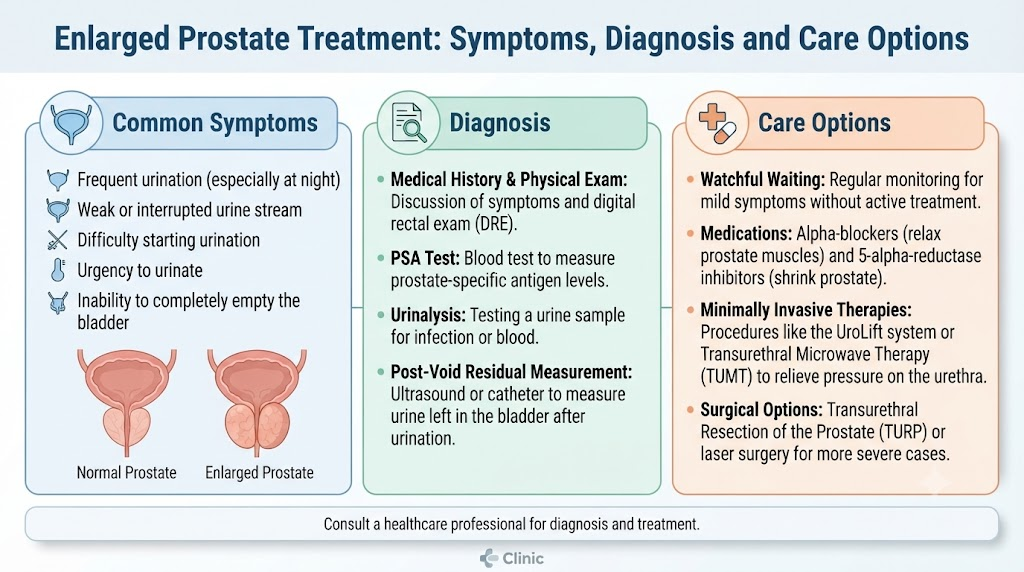
Benign prostatic hyperplasia (BPH), or non-cancerous enlargement of the prostate, frequently affects aging men, causing bothersome lower urinary tract symptoms such as weak flow, hesitancy, and frequent nighttime urination. Enlarged Prostate Treatment options range from observation to medication and surgical intervention:
- Watchful Waiting: Regular monitoring for mild symptoms that do not significantly impact daily life.
- Medications: Alpha-blockers to relax prostate and bladder neck muscles, or 5-alpha reductase inhibitors to shrink the prostate over time.
- Minimally Invasive Therapies: Procedures utilizing thermal energy, water vapor, or mechanical lifting to reduce tissue obstruction without major surgery.
- Surgical Options: Procedures such as Transurethral Resection of the Prostate (TURP) or laser enucleation to remove obstructing prostate tissue.
Urinary Tract Infection Treatment
Urinary tract infections (UTIs) occur when bacteria enter the urinary system, causing inflammation, pain, and frequent urination. Urinary Tract Infection Treatment primarily involves targeted antimicrobial therapy based on clinical assessment and urine culture results.
- Antibiotic Therapy: Prescribed courses of antibiotics tailored to the specific causative pathogen.
- Symptom Management: Medications to alleviate burning and discomfort during urination.
- Evaluation of Recurrent UTIs: Investigating underlying anatomical or functional factors in patients experiencing frequent infections to prevent recurrence.
Bladder Cancer Treatment
Bladder cancer arises from the lining of the bladder and requires careful staging to determine appropriate care. Bladder Cancer Treatment varies depending on whether the tumor is non-muscle-invasive or muscle-invasive:
- Transurethral Resection of Bladder Tumor (TURBT): Endoscopic removal of bladder tumors for diagnosis and initial treatment of non-muscle-invasive disease.
- Intravesical Therapy: Administering medications directly into the bladder via catheter to reduce recurrence risk.
- Radical Cystectomy: Surgical removal of the entire bladder, often accompanied by urinary diversion procedures for advanced or invasive cases.
- Systemic Treatment: Chemotherapy or immunotherapy regimens used prior to or following surgery.
Robotic Urology Surgery
Robotic Urology Surgery represents an advanced technological evolution in minimally invasive procedures. In this approach, the urologist sits at a console, translating hand movements into precise micro-movements of robotic instruments inside the patient’s body through small keyhole incisions.
- Applications: Commonly utilized in complex procedures such as radical prostatectomy, partial nephrectomy for kidney tumors, and reconstructive surgeries.
- Potential Advantages: High-definition 3D visualization, enhanced instrument dexterity, and tremor filtration can aid precision in confined anatomical spaces.
- Considerations: Success depends heavily on the training, skill, and experience of the operating surgeon rather than the technology alone. Robotic surgery is not universally required or suitable for every clinical scenario.
Choosing the Right Urology Hospital
Selecting an appropriate healthcare facility involves evaluating several practical factors to ensure safe, high-quality care. When researching Urology Hospitals, patients and caregivers may consider:
- Specialist Expertise: The presence of experienced urologists and multidisciplinary clinical teams.
- Diagnostic Infrastructure: Availability of advanced imaging, laboratory testing, and urodynamic facilities on-site.
- Treatment Breadth: Capacity to offer comprehensive care ranging from medical management to advanced minimally invasive and robotic procedures.
- Quality and Safety Standards: Adherence to stringent infection-control protocols, patient safety standards, and institutional accreditations.
- Support Services: Availability of dedicated nursing care, patient education resources, and coordinated follow-up programs.
Finding a Urologist Near You
Locating an appropriate specialist ensures continuity of care and convenient access for consultations and follow-up visits. When searching for a Urologist Near Me, patients should look for board certification, relevant subspecialty experience in treating specific conditions, hospital affiliations, and clear communication styles. Seeking a second opinion for major treatment decisions can also provide additional clarity and confidence.
| Treatment Option | Common Use | Potential Benefits | Important Considerations |
| Active Surveillance | Low-risk, slow-progressing conditions (e.g., early prostate cancer) | Avoids or delays treatment side effects | Requires regular, strict follow-up monitoring |
| Minimally Invasive Procedures | Stones, BPH, localized tumors | Shorter recovery time, less postoperative discomfort | Suitability depends on anatomical factors and disease stage |
| Open or Robotic Surgery | Complex tumors, advanced organ disease | Effective anatomical removal and reconstruction | Involves longer recovery and potential surgical risks |
Questions to Ask a Urologist
Preparing thoughtful questions helps patients engage actively in consultations and understand their care plans. Useful questions include:
- What is the specific diagnosis, and what caused this condition?
- What additional diagnostic tests are needed, and what do they involve?
- What are the available treatment options, and which do you recommend for my situation?
- What are the potential benefits, risks, and side effects of the recommended treatment?
- What can I expect during the recovery period, and how will my progress be monitored?
- Are there lifestyle changes or preventive measures I should follow?
- Should I consider a second opinion before proceeding with treatment?
When to Seek Medical Attention
Certain urological symptoms require prompt or urgent medical evaluation. Patients should seek immediate medical care if they experience:
- Complete inability to urinate (acute urinary retention).
- Severe, sudden flank or abdominal pain.
- Heavy bleeding in the urine accompanied by clots.
- High fever and chills occurring alongside urinary symptoms or signs of infection.
Practical Tips for Preparing for a Urology Consultation
To make the most of a urologist appointment, patients can take several practical steps:
- Write down all current symptoms and note when they first began.
- Bring a complete list of current medications, supplements, and dosages.
- Gather previous medical records, imaging scans, and laboratory test results.
- List any questions or concerns to discuss during the visit.
- Bring a family member or caregiver for support and assistance with notes.
Common Challenges in Urological Care
Navigating urological health can present several hurdles for patients. Recognizing these challenges helps individuals prepare and seek appropriate support:
- Symptom Hesitation: Reluctance to discuss sensitive urinary or reproductive symptoms can delay diagnosis and treatment.
- Information Complexity: Medical terminology and diverse treatment pathways can feel overwhelming without clear guidance.
- Navigating Specialist Care: Finding the right hospital and specialist equipped to handle specific conditions requires research and coordination.
- Managing Treatment Decisions: Weighing the benefits and risks of various interventions, particularly for cancer or chronic conditions, demands careful deliberation.
Best Practices for Patients
Adopting proactive health practices contributes to better overall urological well-being:
- Do not ignore persistent or worsening urinary symptoms.
- Seek timely professional evaluation rather than relying on self-management.
- Maintain organized personal medical records and test reports.
- Follow prescribed medication and treatment regimens carefully.
- Attend all scheduled follow-up appointments to monitor recovery and manage long-term health.
Frequently Asked Questions
What conditions do urologists treat?
Urologists diagnose and treat disorders of the urinary tract in men and women, including kidneys, bladder, ureters, and urethra, as well as the male reproductive system.
When should I see a urologist?
A consultation is recommended if you experience persistent symptoms such as blood in the urine, painful urination, frequent urinary tract infections, or difficulty emptying the bladder.
Are kidney stones always treated with surgery?
No. Small kidney stones often pass naturally with increased hydration and pain management, while larger or obstructive stones may require medical procedures or minimally invasive intervention.
What is the difference between an enlarged prostate and prostate cancer?
An enlarged prostate (BPH) is a non-cancerous growth of prostate tissue common with aging, whereas prostate cancer involves malignant cell growth within the gland. They are distinct medical conditions.
How does robotic urology surgery work?
Robotic surgery uses a specialized console that allows the surgeon to control miniature instruments with high precision and 3D visualization through small incisions.
Is preparation required for a urology consultation?
Patients should bring a list of symptoms, current medications, previous test reports, and a list of questions to help the specialist evaluate their condition effectively.
Can urinary tract infections occur in men?
Yes, while more common in women due to anatomical factors, UTIs can occur in men and often warrant a thorough evaluation to identify underlying causes.
Why is follow-up care important after urological treatment?
Follow-up appointments allow the healthcare team to monitor healing, assess treatment effectiveness, detect any recurrence early, and adjust management plans as needed.
Conclusion
Understanding urological health, recognizing early warning signs, and knowing what to expect during diagnosis and treatment are vital steps toward maintaining long-term well-being. From managing common conditions like kidney stones and urinary tract infections to navigating specialized care for prostate and bladder health, informed decision-making supported by qualified professionals makes a significant difference. Resources like UrologyHospitals.com help bridge the gap by providing educational insights into treatment options and specialist care. Individuals experiencing persistent, severe, or concerning symptoms should always seek a comprehensive evaluation from a qualified healthcare professional to ensure safe, accurate, and personalized medical care.