Introduction
Finding the right software for a specific project can feel overwhelming. With thousands of applications available, modern users often spend hours sorting through product pages, feature lists, and pricing tiers just to find a tool that fits their requirements. Whether someone needs an AI-powered content assistant or a robust management platform, having access to clear, organized information makes all the difference. Platforms like BestAIToolix.com serve as structured hubs designed to simplify this search process. By gathering essential product details, categories, and comparison resources in one place, a dedicated software directory allows users to research applications efficiently. Understanding how to use these discovery platforms helps individuals and organizations make informed decisions without getting lost in marketing hype.
What Is BestAIToolix.com?
BestAIToolix.com is an online software discovery and information platform created to help users explore a wide variety of digital applications and technology solutions. The primary purpose of the website is to organize software listings, categories, and product details so that visitors can research available tools more easily. Rather than acting as a software developer or a direct vendor, the platform functions as an informational guide. Users can browse organized directories to find applications suited for different personal and professional tasks. By presenting product features, categories, and available specifications in a structured format, the website helps bridge the gap between software creators and individuals searching for reliable tools.
Why Software Discovery Matters for Modern Users
The digital software market expands rapidly every day. New applications launch constantly, offering diverse features designed to improve productivity, streamline business operations, and automate complex tasks. However, this large volume of choices creates new challenges for users.
People searching for technology solutions frequently encounter difficulties such as:
- Confusing feature lists that make it hard to understand what a tool actually does.
- Hidden pricing structures or complex subscription tiers.
- Uncertainty about whether a tool integrates with existing workflows.
- Difficulty determining if an application is suitable for personal use or business scaling.
Navigating these challenges requires structured information. Reliable software discovery platforms provide the initial overview needed to narrow down choices, allowing users to focus on tools that match their exact technical specifications and operational budgets.
What Can People Explore Through a Software Directory?
Software Categories and Product Discovery
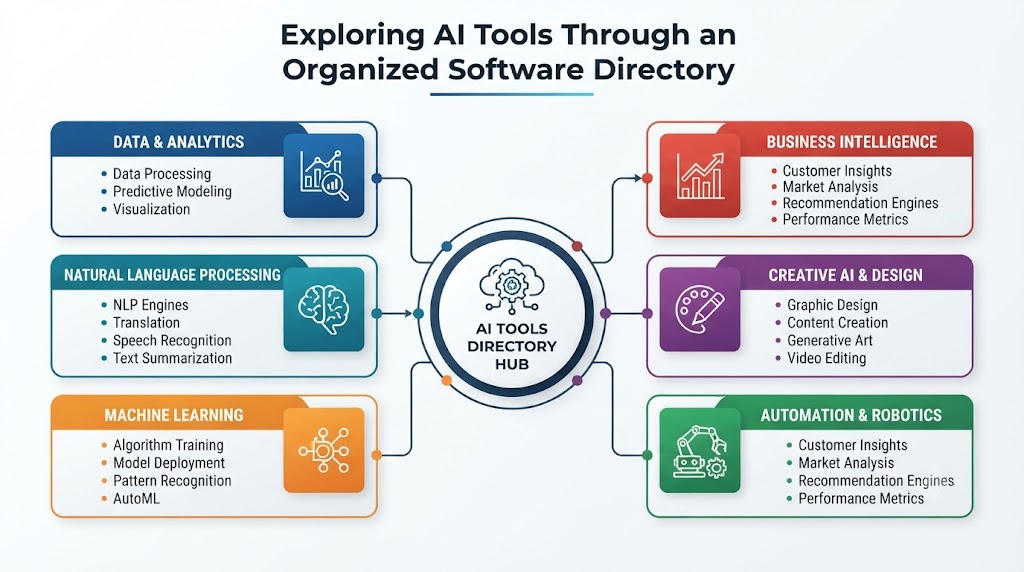
Software directories organize large numbers of applications into clear, navigable categories. This classification helps users find relevant tools without scrolling through unrelated options. Common categories typically include productivity applications, marketing platforms, development utilities, and project management systems. Exploring structured categories allows users to discover alternative solutions they might not have found through standard search engines.
AI Tools and Their Practical Applications
Artificial intelligence applications have transformed how people approach tasks like content creation, data analysis, and workflow automation. An AI tools directory helps users explore these emerging technologies by grouping them according to specific functions. Because different AI systems offer varying capabilities and limitations, examining an organized collection helps users understand which applications best fit their specific projects.
Software Features and Product Information
Understanding what an application can and cannot do is essential before committing time or money. Product pages typically highlight core functionalities, supported platforms, integration options, and system requirements. Reviewing these details helps users verify whether a tool meets their technical needs and whether it requires specialized hardware or training.
Business Software and Productivity Solutions
Organizations require specialized tools to manage daily operations, customer relationships, and internal communications. Researching business solutions involves evaluating how well a platform supports team collaboration, data security, and operational scaling. Utilizing a business software comparison approach helps organizations weigh options based on real operational needs rather than surface-level popularity.
Understanding Software Comparison
When evaluating multiple applications that serve a similar purpose, a direct software comparison becomes necessary. Comparing tools side-by-side allows users to spot important differences in functionality, user interfaces, and pricing models. Effective comparisons focus on criteria that directly impact the user experience, such as ease of use, available integrations, security standards, and customer support channels. Rather than assuming a popular tool is automatically the right choice, buyers should weigh how each product’s specific strengths align with their daily workflows.
| Comparison Factor | What It Matters | Why It Matters |
| Features | Essential and additional functions | Helps assess product suitability |
| Pricing | Subscription plans and additional costs | Helps evaluate affordability |
| Ease of Use | Interface and learning requirements | Helps assess usability |
| Integrations | Compatibility with existing tools | Helps evaluate workflow fit |
| Security | Available security documentation | Helps assess data protection |
| Scalability | Ability to meet future requirements | Helps assess long-term suitability |
| Customer Support | Available support channels | Helps assess assistance options |
| Limitations | Restrictions and missing features | Helps identify potential concerns |
Understanding Software Reviews
Reading feedback from other users and industry writers provides valuable perspective when researching applications. Software reviews often highlight practical advantages and common frustrations that are not immediately obvious from official marketing materials. When reading reviews, it is helpful to look for specific details regarding daily performance, customer service responsiveness, and recurring technical limitations. Considering multiple reviews rather than relying on a single opinion ensures a more balanced view of the product’s reliability and overall quality.
How to Compare AI Tools
Artificial intelligence solutions require specific evaluation criteria because their performance depends heavily on underlying models and output quality. When users want to compare AI tools, they should look closely at intended use cases, supported languages, output accuracy, and data privacy policies. Additionally, checking usage limits, token costs, and available free tiers helps users determine whether an AI application is sustainable for long-term use. Testing available trial versions is often the most effective way to verify if an AI tool produces the desired results for specific tasks.
| Evaluation Factor | What It Matters | Why It Matters |
| Intended Use | Tasks the tool is designed to perform | Helps identify relevant applications |
| AI Capabilities | Available functions and outputs | Helps assess suitability |
| Ease of Use | Interface and required skills | Helps evaluate accessibility |
| Pricing | Plans and usage limits | Helps assess costs |
| Integrations | Supported third-party applications | Helps evaluate compatibility |
| Privacy | Data handling and privacy policies | Helps assess information risks |
| Limitations | Known restrictions and requirements | Helps set realistic expectations |
| Support | Available documentation and assistance | Helps assess ongoing usability |
Understanding the Best Software Tools for Different Needs
Identifying the best software tools depends entirely on the context of use. A tool designed for a large enterprise may be overly complex for a solo freelancer, while a lightweight application might lack the security features required by a corporate IT department. Key selection factors include team size, technical skill levels, budget constraints, and specific integration requirements. Evaluating these factors objectively prevents users from investing in software that looks impressive on paper but fails to solve their actual day-to-day challenges.
Business Software Comparison for Different Requirements
Organizations approaching a business software comparison must look beyond immediate convenience. Evaluating operational software requires analyzing total cost of ownership, implementation timelines, employee training requirements, and long-term vendor stability. Businesses should also verify data compliance standards and security protocols to ensure the software meets industry regulations. Involving team members who will actually use the software during the evaluation phase helps surface practical insights that management might overlook.
Understanding Independent Software Reviews
Evaluating independent software reviews requires looking closely at how feedback is gathered and presented. Independent editorial reviews generally offer structured analyses of product features, while user-generated reviews reflect individual experiences. Readers should check for transparency regarding review methodologies, potential sponsorships, and publication dates. Knowing whether a review is based on hands-on testing or surface-level marketing claims helps users gauge its overall reliability.
Creating a Practical Software Buying Guide
Following a structured software buying guide keeps the acquisition process organized and focused on real requirements. A systematic approach minimizes impulse decisions and ensures that all critical factors—such as security, pricing terms, and technical limitations—are reviewed beforehand. Buyers should always test software through free trials or live demonstrations whenever possible before signing long-term contracts or purchasing annual subscriptions.
How Software Pricing and Subscription Models Work
Software vendors use various pricing models to accommodate different customer segments. Common structures include free tiers, freemium models, monthly subscriptions, annual plans, and usage-based pricing. When reviewing pricing, buyers should watch out for hidden costs such as mandatory setup fees, charges for additional user seats, or paid add-ons required for essential features. Reading the cancellation policy and renewal terms prevents unexpected charges down the road.
How to Evaluate Software Before Making a Decision
Before finalizing any software choice, users should complete a thorough evaluation process. This includes verifying product documentation, checking compatibility with existing hardware or software, and reviewing customer support availability. Testing the user interface during a trial period provides direct insight into how steep the learning curve is for new users or team members.
Who Can Use BestAIToolix.com?
Individuals Exploring Software Tools
Individuals often use discovery platforms to research personal productivity apps, writing assistants, and creative utilities that simplify daily tasks and hobby projects.
Businesses Searching for Software Solutions
Business owners explore structured directories to identify administrative, financial, and operational software that improves efficiency and supports team collaboration.
Professionals Exploring AI Tools
Professionals across various industries research specialized AI applications to automate repetitive workflows, enhance data analysis, and streamline content generation.
Startups Comparing Software Options
Startups evaluate scalable software options that fit initial budget constraints while offering the flexibility to grow as the company expands.
Technology Enthusiasts Researching New Tools
Tech enthusiasts browse emerging software categories and newly launched applications to stay informed about modern digital trends and productivity solutions.
Users Preparing to Purchase Software
People planning a software purchase examine feature breakdowns, pricing details, and review summaries to compare alternatives and select the most suitable option.
Step-by-Step Guide to Finding and Evaluating Software
Step 1: Identify Your Software Requirements
Define your primary goals, essential feature needs, technical constraints, and budget limits before beginning your search.
Step 2: Explore Relevant Software Categories
Use structured directories and category filters to narrow down the types of software that match your specific use case.
Step 3: Discover Suitable Software Tools
Compile an initial list of potential applications by reviewing directory listings and basic product descriptions.
Step 4: Compare Important Features
Evaluate core functionalities, integration capabilities, and technical limitations side-by-side using consistent criteria.
Step 5: Review Pricing and Subscription Plans
Analyze pricing tiers, billing cycles, usage limits, and potential extra costs to ensure the tool fits your financial plan.
Step 6: Evaluate Software Reviews
Read multiple user and editorial reviews to understand practical advantages, common complaints, and overall reliability.
Step 7: Test and Verify Software Information
Explore official documentation, product demonstrations, and available trial versions to test the software hands-on.
Step 8: Make an Informed Software Decision
Weigh all gathered information against your original requirements to select the tool that provides the best value and functionality.
Common Challenges When Searching for Software
Navigating the software market presents several recurring obstacles. Users frequently face information overload due to the sheer volume of available choices, making it difficult to separate genuinely useful tools from heavily marketed applications. Additionally, inconsistent pricing transparency and conflicting user reviews can complicate final purchasing decisions. Addressing these challenges requires patience and a structured research approach. By relying on organized directories, checking official product documentation, and testing tools through trial periods, users can cut through confusion and find reliable solutions for their specific needs.
Best Practices for Software Research
Conducting effective software research involves following a consistent set of guidelines. Users should always define their exact requirements before browsing, compare products using standardized criteria, and cross-reference multiple review sources. Verifying security documentation, integration compatibility, and vendor support options ensures that the chosen tool will remain functional and secure over the long term.
How to Use Online Software Information Responsibly
Online information should always be verified through primary sources whenever possible. Users must check publication dates on reviews, confirm current pricing directly on vendor websites, and read terms of service agreements carefully. Distinguishing between independent editorial content and promotional material ensures that purchasing decisions are based on accurate, reliable facts rather than marketing claims.
Frequently Asked Questions
What is BestAIToolix.com?
BestAIToolix.com is an online software discovery platform that helps users explore digital applications, AI tools, and business software through organized categories, product descriptions, and comparison resources.
How can a software directory help users discover software?
A software directory organizes numerous applications into specific categories, allowing users to browse, filter, and find relevant tools quickly without searching the entire internet manually.
What should users consider when comparing software tools?
Users should compare essential features, pricing models, user interface usability, integration capabilities, security standards, and customer support options side-by-side.
How can readers evaluate software reviews?
Readers should examine multiple user and editorial reviews, check publication dates, look for recurring technical complaints, and consider the context of the reviewer’s experience.
What is the purpose of an AI tools directory?
An AI tools directory groups artificial intelligence applications by function, helping professionals and individuals explore and compare AI solutions for specific tasks like writing or analysis.
How can users compare AI tools for different tasks?
Users can compare AI tools by evaluating their intended use cases, output accuracy, supported languages, usage limits, subscription costs, and data privacy policies.
What factors matter when choosing business software?
Important factors include operational requirements, team size, employee skill levels, integration with existing systems, data security compliance, and total cost of ownership.
Why should users check software pricing before purchasing?
Checking pricing helps users understand billing cycles, hidden fees, user seat limits, and renewal terms, ensuring the software remains affordable over time.
What should readers look for in independent software reviews?
Readers should look for transparency in review methodology, clear separation from sponsored content, hands-on product testing details, and balanced discussions of pros and cons.
How can a software buying guide help users make informed decisions?
A software buying guide provides a structured, step-by-step framework for identifying needs, comparing features, testing tools, and selecting the most appropriate application.
Conclusion
Researching and selecting digital tools requires a thoughtful approach to ensure the chosen application meets your specific goals. Navigating large volumes of options becomes manageable when using structured resources like BestAIToolix.com to explore software categories, compare features, and review product information. By defining your requirements, checking pricing terms, and evaluating tools through available trials, you can make confident decisions that support your personal or business workflows effectively over the long term.