Introduction
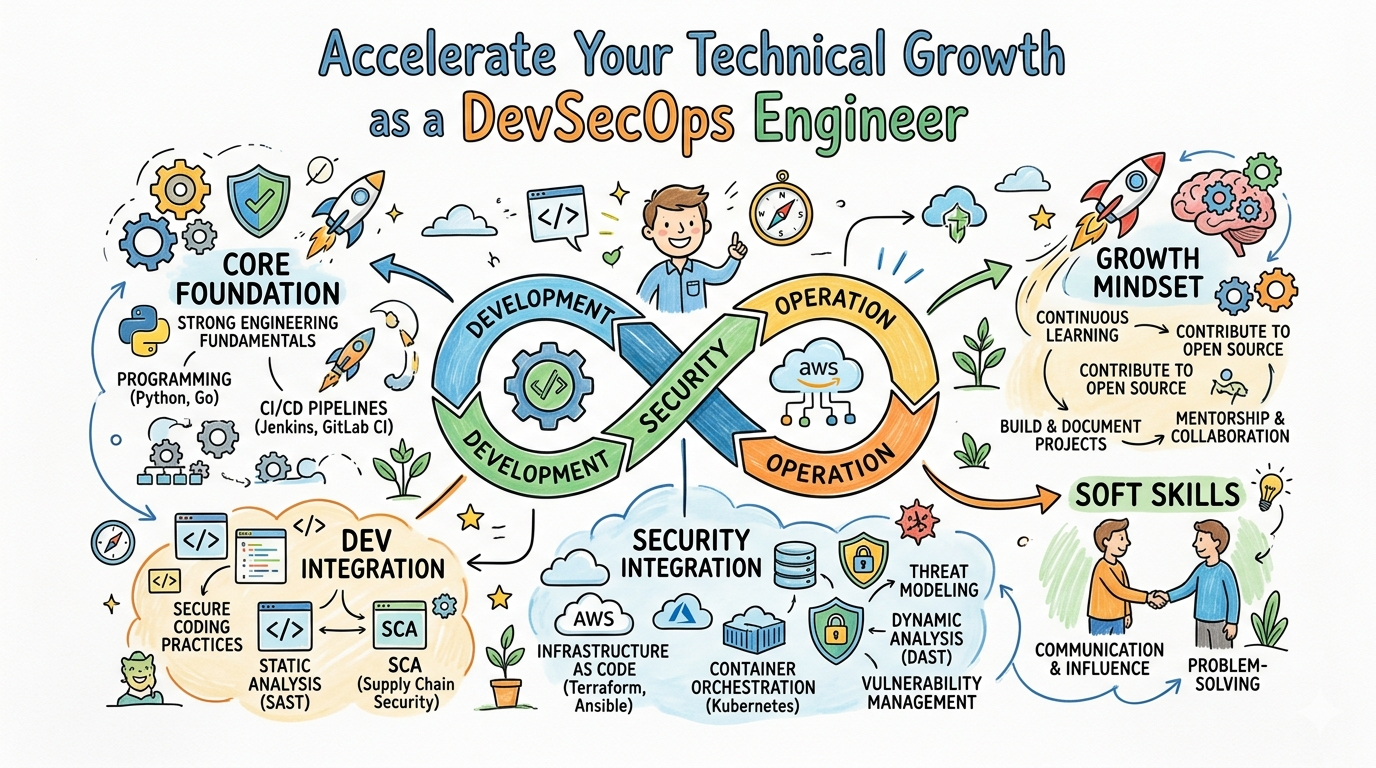
The Certified DevSecOps Engineer credential is a vital benchmark for professionals aiming to bridge the gap between rapid software delivery and robust security. This guide is tailored for software engineers, cloud architects, and security practitioners who recognize that security can no longer be an afterthought in the software development lifecycle. As organizations increasingly adopt cloud-native architectures, the ability to automate security gates within CI/CD pipelines has become a primary driver of operational excellence. This comprehensive overview provides the insights necessary to navigate your learning journey, helping you understand how to Certified DevSecOps Engineer proficiency supports your career growth. By exploring the certification landscape and the platforms like aiopsschool, you can make informed decisions that align with industry demands and your personal professional objectives.
What is the Certified DevSecOps Engineer?
The Certified DevSecOps Engineer represents a shift toward production-focused, automated security engineering. It exists to replace slow, manual security reviews with continuous, integrated feedback loops that live within the developer’s workflow. This certification focuses on practical application, ensuring that engineers can secure code, containers, and infrastructure without impeding the speed of delivery. It aligns with modern engineering workflows by emphasizing “security as code,” which treats security policies, configurations, and testing scripts with the same rigor as application source code. Enterprises utilize this certification to ensure their teams can build resilient systems that withstand sophisticated modern threats while maintaining compliance at scale.
Who Should Pursue Certified DevSecOps Engineer?
This certification is designed for a broad spectrum of technical professionals who influence how software is built and deployed. It is highly beneficial for DevOps engineers looking to add a security layer to their pipelines and for security analysts wanting to modernize their skill sets through automation. SREs, cloud architects, and platform engineers will find the curriculum essential for building self-healing and secure infrastructure. Even engineering managers and team leads benefit from the certification, as it provides the technical foundation needed to make strategic decisions about security tooling and team workflows. Whether you are a beginner looking to enter the security space or an experienced practitioner in India or globally, this path offers a clear framework for professional advancement.
Why Certified DevSecOps Engineer
The demand for professionals who can manage both operational agility and high-level security has never been higher. As organizations continue to move toward decentralized, cloud-native environments, the ability to automate security becomes a fundamental business requirement rather than a niche skill. This certification ensures that your expertise remains relevant as toolsets evolve, focusing on the core principles of DevSecOps that transcend specific platform versions. It offers a significant return on investment by providing a verifiable credential that signals your competence to employers. Furthermore, it creates a sustainable career trajectory, positioning you at the intersection of development and security, where expert talent remains consistently scarce and highly compensated.
Certified DevSecOps Engineer Certification Overview
The Certified DevSecOps Engineer program is delivered via the Certified DevSecOps Engineer curriculum and hosted on devopsschool. This certification is built to validate technical competence through a professional-level assessment that mirrors real-world challenges. It emphasizes hands-on mastery over theoretical memorization, ensuring that participants can manage end-to-end security workflows in production. The program structure is designed for flexibility, allowing practitioners to prepare while maintaining their current professional responsibilities. Assessment is conducted through standardized testing, which confirms that the candidate possesses the technical rigor required to operate in enterprise-grade software environments.
Certified DevSecOps Engineer Certification Tracks & Levels
The certification framework is segmented into levels that match individual professional growth, ranging from foundational concepts to advanced architectural expertise. Foundation levels establish the baseline understanding of security-integrated workflows, while professional levels dive deep into toolchains and specific threat mitigation strategies. Advanced levels focus on enterprise-wide security architecture, policy enforcement, and complex incident response capabilities. Specialization tracks allow engineers to focus their efforts on specific domains like cloud-native security, container orchestration, or automated compliance monitoring. This multi-level approach ensures that as your career progresses, your certification path continues to challenge and refine your engineering capabilities.
Complete Certified DevSecOps Engineer Certification Table
| Track | Level | Who it’s for | Prerequisites | Skills Covered | Recommended Order |
|---|---|---|---|---|---|
| Security | Foundation | Beginners | DevOps Basics | Shift-Left, Security Tools | First |
| Security | Professional | Engineers | Linux, CI/CD | Pipeline Security, IaC | Second |
| Security | Advanced | Architects | Cloud Experience | Threat Modeling, Policy | Third |
Detailed Guide for Each Certified DevSecOps Engineer Certification
Certified DevSecOps Engineer – Professional Level
What it is This certification validates a candidate’s ability to implement and manage automated security testing within continuous integration and continuous deployment environments.
Who should take it It is intended for DevOps engineers, security analysts, and developers with experience in CI/CD who wish to demonstrate practical competency in securing production pipelines.
Skills you’ll gain
- Implementing automated SAST and DAST.
- Managing secret injection and rotation.
- Hardening containerized environments.
- Automating infrastructure-as-code vulnerability scanning.
Real-world projects you should be able to do
- Building an end-to-end secure CI/CD pipeline using Jenkins or GitLab.
- Integrating open-source security scanners into developer workflows.
- Applying Kubernetes admission controllers for security compliance.
- Creating automated reports for vulnerability management.
Preparation plan
- 7–14 days: Focus on foundational concepts of shift-left security and basic tool usage.
- 30 days: Engage in hands-on labs, focusing on pipeline integration and configuration.
- 60 days: Conduct end-to-end practice simulations, including troubleshooting complex security scenarios.
Common mistakes
- Focusing too much on theory rather than hands-on lab practice.
- Neglecting to understand the underlying infrastructure components like Docker or Kubernetes.
- Failing to practice real-world pipeline integration scenarios.
Best next certification after this
- Same-track option: Advanced Cloud Security Architect.
- Cross-track option: Certified SRE Engineer.
- Leadership option: Security Operations Manager.
Choose Your Learning Path
DevOps Path
The DevOps path focuses on the marriage of development and operations with an underlying layer of security. You will learn to build resilient, automated pipelines that prioritize speed without compromising on integrity. Mastery of this path allows you to lead the integration of security tools into existing development workflows.
DevSecOps Path
The DevSecOps path is a deep dive into the specialized integration of security tools at every stage of the software lifecycle. It emphasizes the proactive identification of threats and the implementation of automated remediation. This path is ideal for those dedicated to becoming masters of secure software delivery.
SRE Path
The SRE path bridges the gap between infrastructure stability and security, ensuring that services remain reliable even under attack. It focuses on observability, incident response, and automated scaling of security measures. This is perfect for engineers interested in the stability and scale of high-traffic systems.
AIOps / MLOps Path
The AIOps / MLOps path addresses the unique security challenges of machine learning models and data pipelines. You will learn to secure training data, model deployments, and the automated infrastructure that supports AI initiatives. This is a rapidly emerging field with significant long-term growth potential.
DataOps Path
The DataOps path focuses on securing data pipelines, storage, and analytics workflows. It emphasizes data privacy, access control, and the integrity of data throughout its lifecycle. This path is essential for organizations dealing with sensitive information and large-scale data analytics.
FinOps Path
The FinOps path centers on the cost-efficiency of security operations, ensuring that tools and practices align with budgetary goals. It teaches you to optimize cloud spend while maintaining a high security posture. This path is increasingly relevant for managers and architects managing large cloud budgets.
Role → Recommended Certified DevSecOps Engineer Certifications
| Role | Recommended Certifications |
|---|---|
| DevOps Engineer | Certified DevSecOps Engineer |
| SRE | Certified DevSecOps Engineer, Certified SRE |
| Platform Engineer | Certified DevSecOps Engineer |
| Cloud Engineer | Certified DevSecOps Engineer |
| Security Engineer | Certified DevSecOps Engineer |
| Data Engineer | Certified DevSecOps Engineer |
| FinOps Practitioner | Certified DevSecOps Engineer |
| Engineering Manager | Certified DevSecOps Engineer |
Next Certifications to Take After Certified DevSecOps Engineer
Same Track Progression
Deepen your expertise by pursuing advanced architectural certifications. These focus on multi-cloud security, complex threat intelligence, and enterprise-wide governance, allowing you to influence high-level security strategies and platform designs.
Cross-Track Expansion
Broaden your skill set by moving into related domains like SRE or DataOps. Understanding how security interfaces with system reliability or data pipelines makes you a more versatile engineer capable of handling complex, holistic problems.
Leadership & Management Track
Transition toward leadership by focusing on certifications that cover project management, security team leadership, and executive communication. This allows you to bridge the gap between engineering execution and business-level risk management.
Training & Certification Support Providers for Certified DevSecOps Engineer
DevOpsSchool provides comprehensive instructor-led training programs that focus on the practical application of industry-standard tools. Their curriculum is updated regularly to ensure alignment with the latest technological shifts, making it a reliable choice for engineers seeking hands-on experience and industry-recognized credentials in the DevOps space.
Cotocus specializes in deep-dive technical workshops designed to bridge the gap between theory and execution. Their approach emphasizes project-based learning, ensuring that participants can immediately apply their new knowledge in their day-to-day work environment, which is particularly useful for teams looking to upskill quickly.
Scmgalaxy offers a wide array of training programs focused on source control, CI/CD, and automation. By prioritizing foundational mastery, they help engineers build the solid base required to manage complex software delivery pipelines effectively and securely in modern production environments.
BestDevOps provides focused training tracks that cater to the evolving needs of the modern enterprise. Their programs are structured to help professionals gain proficiency in the latest automation tools, emphasizing efficiency, security, and scalability in every aspect of the software delivery lifecycle.
devsecopsschool is dedicated specifically to the intersection of development, operations, and security. Their specialized certification programs ensure that you gain deep expertise in security automation, making them a leading authority for those looking to specialize in the DevSecOps domain.
sreschool focuses on the principles of site reliability engineering, teaching participants how to manage complex distributed systems. Their training is essential for those who want to ensure that their secure pipelines are also highly reliable and scalable under varying production loads.
aiopsschool provides expert-led training in the integration of artificial intelligence into operations. By focusing on the automation and security of AI/ML workflows, they help engineers prepare for the next generation of intelligent, automated enterprise infrastructure and data systems.
dataopsschool offers programs tailored to the unique challenges of data pipeline automation and management. Their training covers everything from data ingestion to security and lifecycle management, ensuring that data-driven organizations can operate efficiently and safely.
finopsschool focuses on the financial side of cloud engineering, teaching participants how to manage costs effectively. Their training is highly relevant for those looking to balance high-security standards with strict cloud budgeting and resource allocation requirements.
Frequently Asked Questions (General)
- How difficult is the certification exam to pass? The exam is designed to be challenging but achievable for those with hands-on experience. Success requires both a strong understanding of core concepts and the ability to apply them to real-world scenarios.
- How much time is typically required for preparation? Preparation time varies based on your existing knowledge, but most professionals dedicate between four to eight weeks of focused study. Consistent practice in labs is more effective than long, irregular study sessions.
- Are there any mandatory prerequisites for enrollment? While there are no rigid requirements, a basic understanding of Linux, cloud services, and CI/CD pipelines is highly recommended. These fundamentals provide the necessary context to understand complex security topics.
- What is the return on investment for this certification? The ROI is significant, as the certification validates skills that are currently in high demand. It often leads to better job opportunities, higher salary potential, and improved professional credibility.
- Should I follow a specific sequence for these certifications? It is generally recommended to start with foundational tracks before moving to specialized or advanced certifications. This ensures that you have a stable base upon which to build more complex skills.
- How does this certification help with career advancement? It provides an objective, industry-recognized validation of your technical skills. This makes your profile more attractive to employers and helps you stand out in a competitive job market.
- Does the certification focus on specific tool vendors? The training is designed to be tool-agnostic in principle but uses industry-standard open-source and commercial tools for practical exercises. This ensures your skills are transferable across different environments.
- Is this certification recognized globally? Yes, the certification is respected by organizations worldwide. It is designed to meet international standards for security and operations, making it valuable regardless of your geographic location.
- Can I take the exam online, or is it in-person? The certification offers flexible delivery options, including both online proctored exams and testing centers. This allows you to choose the format that best fits your schedule and location.
- How often should I renew my certification? Industry standards suggest refreshing your credentials or pursuing advanced levels every few years. This ensures that your knowledge stays current with the rapid pace of technological change.
- Are there practice exams available before the main one? Yes, practice exams are typically offered to help candidates understand the format and difficulty level. These are excellent tools for identifying knowledge gaps before the official assessment.
- How does this fit into a manager’s career path? For managers, this certification provides the technical vocabulary and strategic understanding needed to lead security initiatives. It allows you to better support your team and make informed resource decisions.
FAQs on Certified DevSecOps Engineer
- What core security metrics are covered in the curriculum? The program covers metrics such as vulnerability remediation time, code coverage of security tests, and frequency of security-related deployments.
- How do I handle security in a legacy environment? The curriculum addresses strategies for wrapping legacy applications in security layers and incrementally transitioning to modern, automated DevSecOps practices.
- Does the certification cover cloud-specific security? Yes, the course includes modules on securing cloud-native services, specifically focusing on identity management, infrastructure-as-code security, and cloud configuration.
- How are container-specific threats addressed? It covers image scanning, runtime security, and network policy enforcement to mitigate risks inherent in container orchestration.
- Is threat modeling a large part of the certification? Yes, it emphasizes the importance of proactive threat modeling as a foundational activity before writing or deploying any application code.
- How do I automate compliance in the pipeline? You will learn to implement policy-as-code to automatically enforce compliance benchmarks like CIS or organizational standards during deployment.
- Does the training cover incident response planning? It includes modules on creating incident response plans that are integrated with your automated CI/CD feedback loops for faster detection.
- Can I use my existing tools in the practice labs? The labs focus on the most popular industry tools, which are likely the ones used in your current professional environment, ensuring practical relevance.
Final Thoughts: Is Certified DevSecOps Engineer Worth It?
Investing in the Certified DevSecOps Engineer credential is a strategic decision for any professional serious about their career in the modern engineering landscape. It provides more than just a certificate; it offers a structured, mentor-driven approach to mastering the complexities of secure software delivery. In an industry where security is increasingly intertwined with every operational decision, having this verified expertise sets you apart as a capable leader. Avoid the temptation of hype and focus on the practical benefits of the knowledge you will gain. If you are committed to building resilient, secure systems and advancing your technical proficiency, this certification is an essential milestone in your career journey.