Introduction
Finishing school is one of those major milestones that feels both exciting and a little overwhelming. One day you are hanging out with your friends during recess, and the next, everyone is talking about what comes next. If you or your child are standing at this crossroads, you are definitely not alone. Suddenly, there are big decisions to make about higher studies, training programs, and career directions. For many students, competitive exams become a big part of that conversation. These tests can open doors to top colleges, professional degrees, scholarships, and special training courses. However, looking at a long list of entrance exams can make anyone’s head spin. There are different eligibility rules, various subjects, and multiple career tracks to sort through. This guide is here to help cut through the confusion. Whether you studied Science, Commerce, or Arts, understanding your options early can make planning your next steps much simpler. At GurukulGalaxy, we believe that informed students and parents make the best choices, so let us break down everything you need to know about post-school entrance exams in plain, everyday language.
What Exactly Is a Competitive Exam?
Let us keep it simple. A competitive exam is basically a test where many students take part to secure a limited number of seats, scholarships, or positions. Unlike your regular school board exams—where you pass as long as you cross a certain percentage—competitive exams rank students against each other. The main purpose of these tests usually falls into a few categories:
- Getting into College: Many professional courses require entrance scores instead of just looking at your board exam marks.
- Winning Scholarships: Some tests help talented students get financial support to help pay for higher education.
- Specialized Training: Certain exams select candidates for specific government or defense academies.
Keep in mind that not every competitive exam does the same thing. Some test your grasp of Physics, Chemistry, or Mathematics. Others test your logical thinking, general awareness, English language skills, or even your creative eye.
Why Do Students Take Competitive Exams After School?
There are several very practical reasons why students choose to prepare for these tests. First, higher education in popular fields like engineering, medicine, and law often has way more applicants than available college seats. Entrance exams provide a structured way to handle admissions fairly. Second, scoring well in a recognized national or state-level exam can help you get into reputed institutions that offer great learning environments, strong infrastructure, and solid career opportunities later on. Third, some students take exams to qualify for scholarships, which can take a huge financial weight off their families. Others look at entrance tests as a direct doorway into specific career sectors, like the armed forces or specialized design institutes. That said, it is equally important to know that competitive exams are not mandatory for every single career path. Many fields offer direct admission based on your school board marks or through simple merit lists. You should only choose an exam if it actually matches what you want to do.
Competitive Exams After Class 10
Many students wonder if there are exams to worry about right after finishing Class 10. While major professional entrance tests happen later, there are still a few valuable options worth knowing about at this stage.
Talent Search and Scholarship Tests
- National Talent Search Examination (NTSE): Historically conducted to spot talented students early and support them financially through their higher studies. (Tip: Always check the latest official updates regarding national scholarship exams before applying).
- State-Level Scholarship Tests: Many state governments hold talent exams for Class 10 students to offer recognition and support.
- Olympiads: Subject-focused tests in Mathematics, Science, and English organized by various educational groups help build strong analytical habits early on.
Polytechnic and Diploma Courses
If you are eager to dive into technical fields early, polytechnic entrance exams conducted by various state boards after Class 10 are worth exploring. These lead to diploma courses in engineering and technology, allowing you to start practical training sooner.
Competitive Exams After Class 12
Class 12 is usually when the real heavy lifting begins for competitive exams. Because students branch out into Science, Commerce, or Arts, the choices vary widely based on your stream and interests.
Let us walk through the major categories.
Top Entrance Exams for Engineering
Engineering remains a classic choice for students with a background in Physics, Chemistry, and Mathematics.
- JEE Main: Joint Entrance Examination (Main) is a major national-level test used for undergraduate engineering admissions in National Institutes of Technology (NITs), Indian Institutes of Information Technology (IIITs), and other participating colleges. It is also the qualifying test for JEE Advanced.
- JEE Advanced: The gateway test for admission into the prestigious Indian Institutes of Technology (IITs). You have to qualify through JEE Main first to take this one.
- State-Level Engineering Tests: Many states run their own entrance exams for state government and private engineering colleges.
Always double-check the latest eligibility rules, subject requirements, and official dates before applying.
Top Entrance Exams for Medical Courses
If your core subjects are Physics, Chemistry, and Biology and you want to work in healthcare, dentistry, or nursing, the entrance route is very streamlined.
- NEET-UG: National Eligibility cum Entrance Test (Undergraduate) is the single national-level exam in India for admission to MBBS, BDS, AYUSH, and other medical-related undergraduate programs.
Make sure to review the official syllabus and eligibility guidelines issued by the examining authority well ahead of time.
Top Exams for Law
A career in law goes far beyond traditional courtroom practice today. Corporate law, cyber law, and public policy offer exciting paths for students from any academic stream.
- CLAT: Common Law Admission Test is widely taken by students wanting admission to undergraduate (LL.B) and postgraduate law programs at participating National Law Universities.
- AILET: All India Law Entrance Test is conducted specifically for admission to the National Law University, Delhi.
- University-Specific Tests: Many private and autonomous law schools run their own assessments or accept scores from other national aptitude tests.
Top Exams for Defence Careers
For students who feel a strong call to serve the nation, the armed forces offer honorable career paths straight out of school.
- NDA Exam: National Defence Academy examination is conducted by the Union Public Service Commission twice a year. It selects eligible unmarried candidates for the Army, Navy, and Air Force wings.
Candidates must meet specific physical fitness, medical standards, and age limits set by the defense boards.
Top Exams for Design and Creative Courses
Creative fields like fashion design, industrial styling, interior architecture, and fine arts do not care much about standard academic tests—they look for creative aptitude instead.
- NIFT Entrance Exam: Conducted by the National Institute of Fashion Technology for design, management, and technology courses.
- NID DAT: Design Aptitude Test held by the National Institute of Design for undergraduate design studies.
- UCEED: Undergraduate Common Entrance Design for admission to design programs at participating IITs and other top colleges.
- NATA: National Aptitude Test in Architecture, often required for undergraduate architecture admissions.
How to Choose the Right Competitive Exam
Choosing an exam is a deeply personal choice. Never pick a test simply because your best friend is taking it or because it sounds impressive at family gatherings.
Take a moment to think about:
- Your Current Class and Subjects: Make sure the exam lines up with what you are studying in school (Science, Commerce, or Arts).
- What You Genuinely Enjoy: Pick a field that sparks your curiosity. If you love solving puzzles and math, engineering might fit. If you love reading, arguing a point, and current affairs, law might be your calling.
- Your Natural Strengths: Be honest with yourself about where your skills lie and where you might need a little extra help.
- Eligibility Requirements: Look closely at age limits, qualifying marks, and required subject combinations.
- Time Available: Estimate how much time you have left before the test and whether you can realistically balance it with your regular schoolwork.
Check Eligibility Before You Start Preparing
One of the most frustrating mistakes students make is spending months studying for an exam only to realize later that they missed a crucial eligibility rule.
Before diving into heavy preparation, always check:
- Age Limits: Many entrance exams have strict lower and upper age caps.
- Educational Qualifications: Confirm whether you need a specific minimum percentage in your Class 12 board exams.
- Subject Requirements: Certain tests demand specific high school subjects like Mathematics or Biology.
- Residency Rules: Some exams have specific rules regarding state domicile or citizenship.
Rules can shift from year to year, so always pull up the latest official information bulletin directly from the exam authority.
Get to Know the Official Syllabus
Think of the official syllabus as your roadmap. Do not rely entirely on random book lists floating around the internet or what you heard from a senior.
Download the official syllabus document and break it down topic by topic. Put things into two piles: topics you feel good about, and topics that need work. This keeps you from wasting time studying random chapters that will not even show up on the test.
Understand the Exam Pattern
Every test has its own personality. Knowing what to expect on test day helps calm your nerves.
Take a look at:
- Question Format: Are they multiple-choice questions (MCQs), descriptive questions, or a mix of both?
- Marking Scheme: Is there negative marking for wrong answers? Knowing this changes how you approach answering questions.
- Time and Sections: How long is the test, and how is the time divided across different subjects?
How to Kick Off Your Preparation
Starting your prep does not mean you have to lock yourself in a room and study fourteen hours a day. That usually leads to burnout.
Try a steady, balanced approach:
- Review the Syllabus: Go through every topic calmly.
- Pick Reliable Study Materials: Stick to standard textbooks and trusted resources recommended by teachers.
- Make a Realistic Timetable: Build a daily routine that gives you time for schoolwork, self-study, and proper rest.
- Revise Regularly: Make short weekly notes so you do not forget what you studied earlier in the month.
- Practice Consistently: Solve sample questions and past papers to get used to the pace of the exam.
Balancing School Studies and Exam Prep
Your regular school studies form the bedrock of your preparation. A lot of entrance tests base their core concepts on senior secondary school curricula anyway.
Do not completely ignore your school board exams while chasing competitive tests. Having a strong grasp of your school subjects makes tackling advanced entrance questions much easier. Balance both sides of your studies wisely.
Mock Tests: Your Best Friend
Mock tests are practice exams that simulate real test conditions. Taking them regularly helps in a few major ways:
- Time Management: You learn how to pace yourself so you are not rushing at the very end.
- Spotting Weaknesses: Practice tests highlight the exact chapters where you tend to make silly mistakes.
- Building Stamina: Sitting through a three-hour exam takes mental energy, and mock tests help build that muscle.
Always review your mistakes after taking a practice test. Understanding why you got something wrong is infinitely more useful than just looking at your final score.
How Parents Can Support the Journey
Parents play a huge role in keeping things grounded. The best way to help is by creating a calm, supportive home environment.
- Listen Actively: Talk openly about career interests without forcing your own unfulfilled dreams onto the student.
- Keep Pressure in Check: Remind them that exams are important, but they do not define a person’s entire worth or future happiness.
- Encourage Healthy Habits: Make sure they get decent sleep, eat home-cooked meals, and take breaks to step away from the desk.
Common Pitfalls to Avoid
Being aware of common traps can save you a mountain of stress:
- Following the Herd: Choosing an exam just because all your friends are signing up for it.
- Skipping Eligibility Checks: Forgetting to verify age or subject rules beforehand.
- Hoarding Too Many Books: Buying twenty reference books instead of thoroughly mastering two or three good ones.
- Never Revising: Learning new things every day while letting older chapters slip out of your memory.
- Cramming at the Last Minute: Trying to master an entire syllabus in the final two weeks.
Competitive Exams vs. Regular Admissions
It helps to remember that competitive exams are only one road among many.
Many reputed colleges and universities offer admissions based purely on your senior secondary board percentages or through merit lists. Others look at personal interviews, portfolios, or statements of purpose. Take a look at all your options before deciding which path feels right for you.
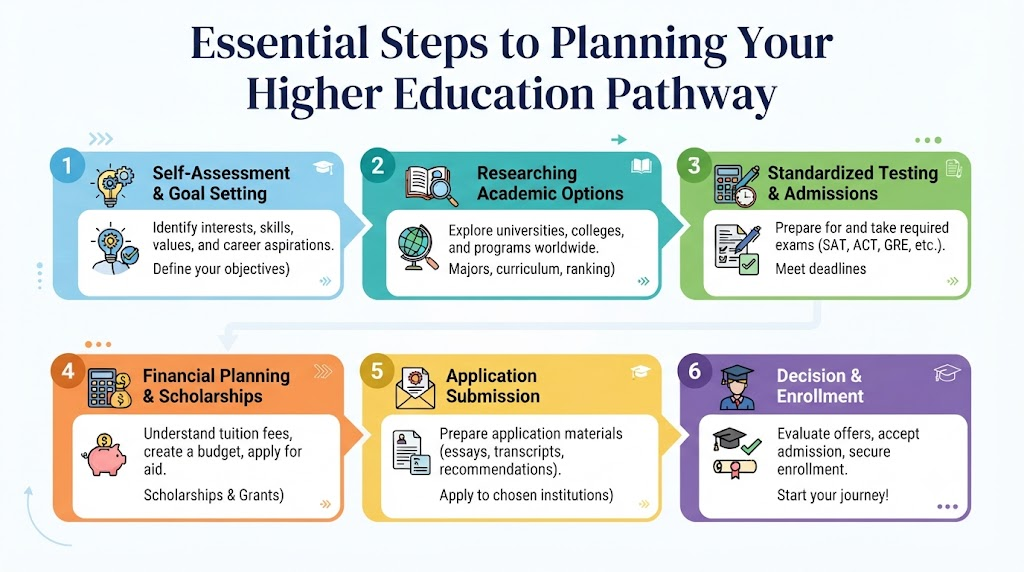
Creating a Smart, Stress-Free Plan
A simple plan keeps your preparation organized:
- List out the things you enjoy studying and the careers that catch your eye.
- Figure out which courses lead to those careers.
- Check which entrance exams (if any) are actually required.
- Confirm your eligibility and note down application deadlines.
- Break the syllabus down into small, weekly learning targets.
Why Keeping Up with Official Updates Matters
Exam dates, application windows, syllabus tweaks, and eligibility rules can shift from year to year.
Always rely on official websites and notifications issued by the exam conducting body. Avoid trusting casual WhatsApp forwards or outdated blog posts about exam patterns. Staying updated saves you from nasty last-minute surprises.
How GurukulGalaxy Helps Along the Way
At GurukulGalaxy, we want to help students navigate these choices with clarity and confidence. Through our structured study guides, learning resources, and career articles, our goal is to make educational info easy to digest.
While no platform can promise guaranteed exam ranks or magic results, having access to clear guidance and practical advice can make your preparation feel a whole lot smoother. Feel free to explore our resources whenever you need a helping hand.
Frequently Asked Questions
What are competitive exams after school? Competitive exams are tests students take after finishing Class 10 or Class 12 to secure college admissions, win scholarships, or qualify for specific professional and training programs.
Which exams can students take after Class 10? Students after Class 10 can look into talent search exams, scholarship tests, Olympiads, and polytechnic or diploma entrance tests depending on their region and interests.
Which competitive exams are available after Class 12? Major options after Class 12 include entrance tests for engineering, medicine, law, defense, design, architecture, and general university degree admissions.
Which entrance exam is suitable for engineering students? JEE Main and JEE Advanced are the main national tests for students aiming for engineering education in top institutions like NITs and IITs.
What is the main entrance exam for medical courses in India? NEET-UG is the single national entrance test used for undergraduate medical and dental admissions across approved colleges.
Which exams can students take for law courses? CLAT and AILET are prominent law entrance exams used for admissions into premier national law universities.
What should students check before choosing a competitive exam? Students should evaluate their own interests, academic strengths, subject eligibility, age limits, syllabus requirements, and long-term career goals.
How early should students start preparing for competitive exams? Starting preparation in Class 11—or building strong basics earlier in school—gives students plenty of time to understand concepts without feeling rushed.
Are competitive exams necessary for every student? No, they are not mandatory. Many higher education programs offer admissions through direct merit, board exam scores, or university selection processes.
How can students prepare for competitive exams after school? Students can prepare by understanding the syllabus, gathering reliable study books, setting a realistic daily routine, practicing past questions, and taking regular mock tests.
Conclusion
Choosing your next step after school is an exciting chapter. Whether you are leaning toward engineering, medicine, law, design, defense, or general university studies, competitive exams can open doors to wonderful experiences. Remember that the right exam depends entirely on your personal interests, high school subjects, eligibility, and what you want out of life. Always research the official guidelines carefully before you start studying. At GurukulGalaxy, we are here to support your educational journey with clear guidance and practical resources. Explore our website whenever you need helpful study tips to keep you moving forward.