Introduction
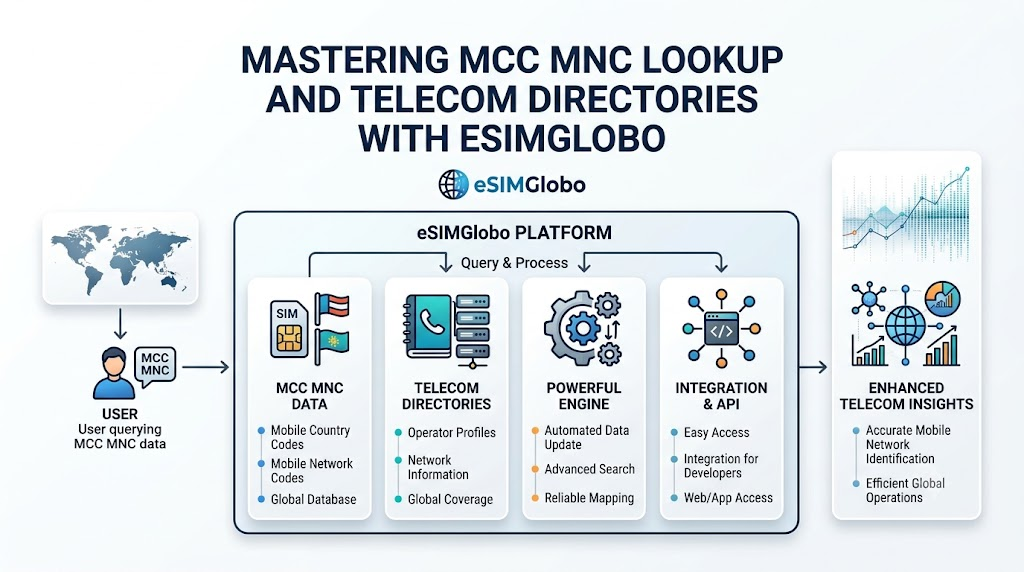
Finding the right mobile network code can be a tough task for developers and telecom teams. When a device connects to a foreign network, it needs precise identification data to work properly. Without an accurate MCC MNC lookup, roaming apps and network tools fail to recognize carrier signals. This data relies on Mobile Country Codes and Mobile Network Codes. Together, these numbers form a unique identity for every cellular provider worldwide. eSIMGlobo provides clear tools to help you research these codes easily. In this article, you will learn how network codes work and how to use telecom directories effectively.
Understanding MCC and MNC Codes
Let us look at how network codes function. MCC stands for Mobile Country Code. It is a three-digit number that identifies a specific country. MNC stands for Mobile Network Code. It has two or three digits and identifies the specific operator within that country.
For example, India uses the MCC 404 or 405. An operator like Airtel inside India uses a specific MNC like 10 or 45. Combining these codes creates a unique identifier. Performing an MCC MNC lookup helps engineers and apps identify cellular towers quickly. This process ensures that mobile devices connect to the correct partner network.
PLMN Code Lookup and Its Purpose
A PLMN code combines the MCC and MNC into one single string. PLMN stands for Public Land Mobile Network. A PLMN code lookup lets users check the exact network identifier of a carrier. Telecom engineers use this lookup during roaming testing and network optimization. It shows which network broadcast is active in a specific region.
But remember one important detail. A PLMN code lookup only identifies the network signal. It does not guarantee active commercial service or roaming agreements. Always verify service availability through official carrier channels before launching apps.
Finding Mobile Network Codes by Country
Researching carrier codes is easiest when grouped by geographic regions. Reviewing mobile network codes by country helps users filter out unrelated records. Every nation has a designated range of numbers assigned by international authorities.
A complete mobile country code list gives researchers a structured starting point. For instance, European nations share specific MCC blocks, while North American nations use others. Developers use these country lists to build location-based network routing tools. This geographic sorting saves time during large telecom analysis projects.
Using a Mobile Network Operator Directory
A mobile network operator directory brings carrier data into one place. This directory lists official operator names, brand titles, and active network codes. Telecom researchers use it to cross-check company names against technical codes.
Mobile app teams also use these directories to update carrier selection menus. Having clean operator data stops app crashes and connection errors. It helps systems map user signals to the correct company profile. Clean directories make global roaming features much easier to maintain.
Exploring a Global Telecom Provider Directory
Telecom markets cross international borders every day. A global telecom provider directory maps out operators across multiple continents. It allows users to view carrier details from different regions in one unified place.
Researchers use this broad view to study international telecommunication trends. eSIMGlobo organizes these global records to simplify cross-border research. Developers rely on these regional lists to test multi-country applications. Exploring global records helps teams understand how different markets assign their network identifiers.
Understanding a Telecom Operator Database
A reliable telecom operator database holds thousands of verified carrier records. These records include corporate names, country codes, and network status updates. Source quality is critical when working with telecom data.
Outdated records cause connection failures and billing errors in mobile applications. Researchers must ensure their database updates frequently. Fresh records protect users from relying on closed or rebranded companies. Clean data keeps roaming tools running smoothly and accurately.
Exploring an MVNO Directory
Not every mobile brand owns physical cellular towers. An MVNO directory lists Mobile Virtual Network Operators around the world. An MVNO rents network infrastructure from a traditional host operator.
Because of this setup, some MVNOs share the network codes of their host. Others receive distinct codes depending on local telecom regulations. An MVNO directory helps researchers track these smaller brands. It shows which host network powers each virtual operator. This distinction is vital for accurate roaming and market analysis.
Finding Providers Through an eSIM Provider Directory
Digital SIM technology changes how travelers connect abroad. An eSIM provider directory lists companies that sell profile plans directly to consumers. These providers might be traditional carriers, MVNOs, or digital-first travel brands.
It is important to know the difference between these companies. A network operator builds and runs cellular towers. An eSIM seller packages connectivity for traveler devices. An eSIM provider directory helps users find retail plan sellers rather than infrastructure owners. This clarity helps developers and travelers choose the right service partners.
Understanding an MCC MNC Lookup API
Software tools often need instant access to carrier data. An MCC MNC lookup API lets software programs ask for network details automatically. API stands for Application Programming Interface. In simple terms, it acts as a digital bridge between two systems.
A mobile app can send a code to the API and receive the operator name instantly. Telecom tools use these automated queries to process large datasets without manual searching. When checking eSIMGlobo features, review their documentation to see how automated queries work for your project.
Common Uses of Mobile Network Codes
Mobile network codes serve many practical purposes across different industries. Network engineers use them to identify local cellular transmitters. App developers use them to configure automatic APN settings for travelers. Data analysts use them to study market share and roaming partner links. Security teams also use codes to signal unusual connection attempts.
But remember the limits of code data. Codes only identify network ownership. They do not show signal strength, pricing, or current network speeds.
Common Lookup Mistakes
People often make simple errors when researching telecom codes. One common mistake is mixing up MCC and MNC values. Entering a three-digit code into a two-digit field causes lookup failures.
Another error is using incomplete or outdated records. Telecom companies merge or rebrand often, which changes their assigned identifiers. Users also assume every code holder offers direct consumer services. Many code holders only run wholesale or backbone infrastructure. Checking multiple verified sources prevents these costly mistakes.
How eSIMGlobo Helps With Telecom Research
Conducting telecom research requires reliable and structured data sources. eSIMGlobo provides clean directories designed to simplify this search process. Researchers can explore country lists, operator profiles, and virtual network records in one location.
The platform focuses on presenting clear technical details without confusion. While looking through records, always keep directory limits in mind. Code lists provide a solid foundation for telecom studies and app building. Using organized data saves time and improves project accuracy.
Table 1: MCC, MNC, and PLMN Compared
| Term | Full Form | Simple Meaning | Main Purpose |
| MCC | Mobile Country Code | Three-digit code for a country | Identifies the nation where a network operates |
| MNC | Mobile Network Code | Two or three-digit code for a carrier | Identifies the specific mobile operator |
| PLMN | Public Land Mobile Network | Combined MCC and MNC string | Identifies a specific cellular network globally |
Table 2: Common Telecom Lookup Needs
| Lookup Type | What It Involves | Main Benefit |
| Country Code Search | Finding codes by geographic location | Narrows research to specific nations |
| PLMN Lookup | Checking combined network identifiers | Helps verify active network signals |
| Operator Directory | Exploring carrier names and codes | Keeps app carrier lists updated |
| MVNO Research | Tracking virtual network brands | Shows which host network powers a brand |
| eSIM Research | Finding digital plan sellers | Connects users with profile providers |
| API Lookup | Automating code queries in software | Speeds up data processing in apps |
Frequently Asked Questions
What Is an MCC MNC Lookup?
An MCC MNC lookup is the process of checking mobile country and network codes to identify a specific cellular provider. This lookup helps mobile apps, telecom tools, and roaming systems recognize which carrier operates a specific network signal.
What Is the Difference Between MCC and MNC?
MCC stands for Mobile Country Code, which identifies the nation. MNC stands for Mobile Network Code, which identifies the specific operator within that country. Together, they create a unique numeric identity for every mobile carrier across the globe.
What Does a PLMN Code Identify?
A PLMN code identifies a specific public land mobile network by combining the MCC and MNC. It acts as a complete digital address, allowing telecom systems to recognize exact network broadcasts during international roaming and testing.
How Can I Find Mobile Network Codes by Country?
You can find mobile network codes by browsing structured geographic directories. These lists group carrier codes by nation, allowing researchers and developers to quickly filter numbers and locate specific operators within targeted regions.
What Does a Mobile Network Operator Directory Show?
A mobile network operator directory displays official carrier names, brand titles, and active network codes. It provides a centralized reference list that helps developers and telecom researchers cross-check company details and maintain accurate network databases.
Does Every Telecom Provider Have Its Own MCC and MNC?
Not every telecom provider has unique codes. Many virtual operators and smaller brands share the network codes of their host infrastructure provider. Code assignments depend on local regulations and whether the company operates physical cellular towers.
What Is the Difference Between an MNO and an MVNO?
An MNO owns physical cellular towers and network infrastructure. An MVNO rents network access from an MNO to sell services to customers. MVNOs often rely on their host operator’s network codes for connectivity routing.
How Is an eSIM Provider Directory Different From a Telecom Operator Database?
An eSIM provider directory lists companies that sell digital travel plans to consumers. A telecom operator database stores technical network codes, infrastructure owners, and carrier technical records. They serve different purposes for travelers and developers.
What Is an MCC MNC Lookup API Used For?
An MCC MNC lookup API allows software applications to query network codes automatically. Developers use these digital tools in mobile apps and telecom systems to fetch operator details instantly without manual directory searches.
Why Should I Verify Network-Code Records?
Verifying network-code records protects your projects from outdated information. Companies frequently merge, rebrand, or change infrastructure. Checking fresh sources ensures your applications connect to active networks and prevent connection errors for users.
Conclusion
Researching mobile network codes and telecom directories is essential for modern app development and roaming analysis. MCC, MNC, and PLMN codes give developers the data needed to identify carriers accurately. Country lists, operator directories, and lookup APIs simplify this technical research process. Always remember that network codes show ownership rather than live coverage. Using structured platforms like eSIMGlobo helps teams access clear telecom data easily. Start exploring reliable network directories today to improve your next project. Would you like to explore specific regional operator codes or learn more about integrating lookup tools into your application?