Introduction
Exams take a lot of time, energy, and hard work. Students often study for many weeks or months before the big day arrives. This long path can feel heavy, tiring, and hard to manage. You might start with big excitement, but that high energy can fade over time. You do not need to feel excited or joyful every single day. Small habits and clear goals can help you keep going when things get tough. This guide will show you how to study with confidence, protect your peace of mind, and keep your motivation alive from start to finish.
Why Students Lose Motivation During Long Exam Preparation
Studying for a long time brings many hidden challenges. You might feel very tired from reading the same textbooks and notes every single day. Boredom can creep in when topics feel dull, repetitive, or hard to understand.
Distractions are also very common in modern student life. Phones, video games, social media, and outside noise make it very easy to stop studying. Slow progress can trick you into thinking you are not learning fast enough.
Sometimes, a deep fear of failure stops you from even opening your books. Losing motivation does not mean you lack intelligence or ability. It only means you need a better plan, a gentler routine, and some helpful rest.
How to Stay Motivated During Long Exam Preparation
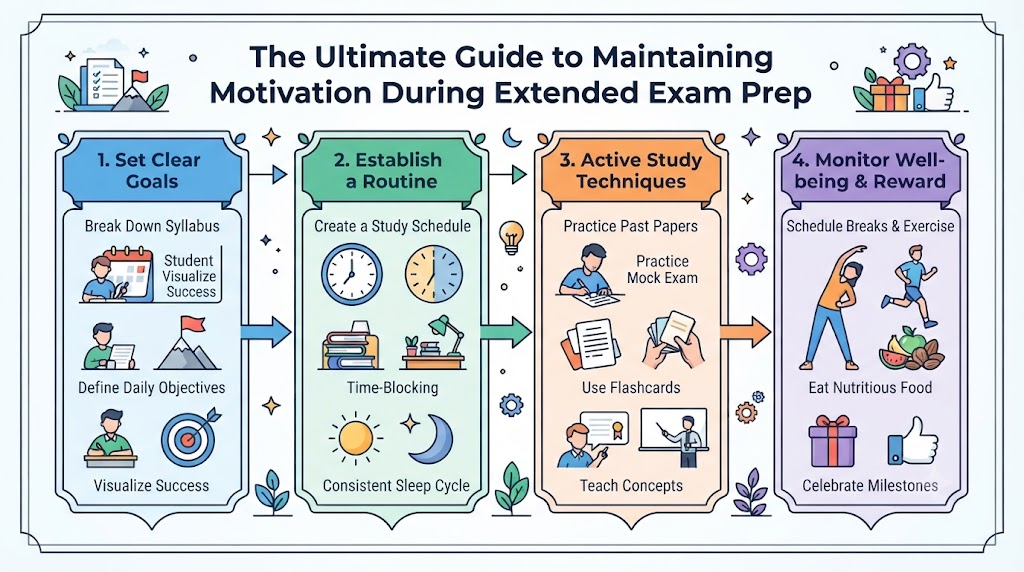
Building steady habits helps you study even when your motivation feels completely low. These simple steps make long exam preparation much easier and kinder to your mind.
Set Small and Clear Goals
Big tasks can feel very scary and heavy. Do not try to finish a whole textbook in one day. Break large chapters into small, easy pieces that you can manage in minutes.
For example, aim to learn just two pages of math or read one science topic. Small goals are easy to finish and rarely feel overwhelming. Each finished goal gives your brain a quick boost of energy and happiness.
Make a Simple Study Plan
A daily plan tells you what to study next without any confusion. It saves you from wasting precious time wondering what to do. Keep your plan simple, clear, and very realistic.
Write down two or three clear tasks for the day in a notebook. Cross them off your list with a smile when you finish them. This makes your study time feel organized, calm, and purposeful.
Follow a Steady Routine
A regular study time builds a strong and helpful habit over time. Try to sit down at the exact same time each day. Your brain gets used to this time slot and helps you focus much faster.
Always leave room for rest, hobbies, and other daily duties. A good routine feels natural and supportive, and it should never feel like a prison.
Track Your Progress
Seeing your hard work helps you stay positive on difficult days. Use a notebook or a simple calendar to mark completed tasks and chapters.
When you look back at your notes after a week, you see how much you have truly learned. Small wins show you that your daily effort matters a lot.
Take Short Breaks
Studying for hours without a single break makes your brain tired and slow. Short breaks help you return to your work with much better focus and energy.
Study for twenty-five minutes, then rest for five minutes. Drink some cool water, stretch your legs, or look out the window to rest your eyes during your break.
Remove Common Distractions
Phones and notifications can steal your study time very fast without you noticing. Put your phone in another room or turn off all message alerts while you read.
A clean and quiet desk helps your thoughts stay clear. When your space is tidy and peaceful, your mind stays calm and ready to learn.
Reward Yourself for Small Wins
Give yourself a nice treat after you finish a hard study goal. A short walk outside, a favorite healthy snack, or time talking with family can make you feel great.
Rewards teach your brain that hard work brings good and happy feelings. Keep your treats simple, healthy, and refreshing.
Learn From Mistakes
Wrong answers do not mean you are bad at a subject or a failure. They simply show you what topics need a little more revision and care.
Review your mistakes with a calm mind instead of feeling sad or angry. Every single correction brings you one step closer to your final goal.
Stay Connected With Supportive People
Teachers, friends, and family can help you stay on the right track. Talk to them openly when you feel stuck, lonely, or tired.
Ask questions without any fear or hesitation. Sharing your worries makes them feel much smaller and far easier to handle.
Build a Healthy Study-Life Balance
Your body needs wonderful care to learn new things and remember them. Get enough sleep every night so your brain can repair and rest. Eat healthy meals and move your body with a short walk or play.
Studying longer does not always mean learning more information. Rest is just as important as reading books. Always ask a trusted adult for help if stress feels too big.
How to Stay Focused When Motivation Feels Low
Some days will feel extremely hard and heavy. You might want to skip your books and do nothing at all. On those days, try using a very small and friendly trick.
Tell yourself you will study for just five minutes and no more. Open your book and read one single paragraph or look at one simple diagram. Often, starting is the hardest part of the entire job.
Once you begin, you can usually keep going for a little longer without force. You can also review an old topic that you already know very well. This builds a quick feeling of success and warmth.
Remember that you can change your daily plan when you feel tired or sick. Small steps forward are always much better than stopping completely.
Common Mistakes to Avoid During Exam Preparation
Many students fall into simple traps during long study periods. Knowing these mistakes helps you stay safe, steady, and healthy.
- Unrealistic Study Plans: Planning to study for ten hours straight leads to quick mental burnout. Keep your study blocks short and realistic.
- Skipping Breaks: Working without rest tires your brain and slows down your learning. Always take short pauses between tasks.
- Comparing Progress: Comparing your marks with friends only brings worry and doubt. Focus on your own growth and daily goals.
- Ignoring Weak Topics: Skipping hard chapters makes them much harder later. Face difficult subjects with help from teachers or friends.
- Studying Without Revision: Reading a chapter once is not enough for long-term memory. Revise old topics often to keep them fresh in your mind.
A Simple Daily Study Routine for Students
This sample routine helps you plan your day with balance. You can change the times to match your school hours and personal needs.
| Activity | Suggested Time | Purpose |
| Morning Study | 1 Hour | Learn new and fresh topics when your mind is clear. |
| School or Rest | Morning to Afternoon | Attend classes, listen to teachers, and relax. |
| Afternoon Revision | 45 Minutes | Review what you learned earlier in the week. |
| Break and Snack | 30 Minutes | Rest your eyes, stretch, and eat something healthy. |
| Practice Tasks | 1 Hour | Solve questions, write notes, or do problems. |
| Evening Relaxation | 2 Hours | Spend time with family, play outside, or unwind. |
| Night Wind-Down | 30 Minutes | Read a light topic and prepare to sleep early. |
How GurukulGalaxy Can Support Students
Finding the right study materials can sometimes feel confusing and overwhelming. GurukulGalaxy offers helpful educational discussions and exam information for students looking for guidance.
You can read clear study resources and guides on the website to learn useful exam methods. These articles help you understand school tests, study techniques, and competitive exams much better.
Using trusted guides makes your daily preparation smooth and clear. Explore the platform to find helpful tips for your learning journey.
Frequently Asked Questions
1. How can I stay motivated during long exam preparation?
Set small daily goals and break large tasks into easy pieces. Track your progress and reward your hard work regularly.
2. What should I do when I feel tired of studying?
Take a short break to walk, drink water, or rest your eyes. Start again with a very small five-minute task.
3. How can I stay focused while preparing for exams?
Put away your phone and keep your study desk clean and quiet. Stick to a simple daily routine that feels natural.
4. How many hours should I study each day?
Study time depends on your age, subjects, and personal needs. Quality and focus matter much more than long hours.
5. How can I avoid stress during exam preparation?
Get enough sleep, eat healthy meals, and talk to family when you feel worried. Keep a balanced daily routine.
6. Is it okay to take a day off from studying?
Yes, taking a full day off to rest and recharge is completely healthy. It helps your mind feel fresh when you return to your books.
7. How do I stop getting distracted by my phone while studying?
Turn off your phone notifications or leave it in another room. A distraction-free space helps you finish your work faster.
8. What is the best way to remember what I study?
Review your notes often and practice writing down what you learned. Active revision is the true key to long-term memory.
9. What should I do if a subject feels too difficult?
Break the hard topic into tiny parts and ask a teacher or friend for help. Do not let one tough subject stop your progress.
10. How can I stop comparing my study speed with friends?
Everyone learns at their own pace and has different goals. Focus only on your own daily improvement and steady steps.
11. How can I maintain my energy during evening study sessions?
Eat a light snack, drink a glass of water, and stretch your body. A short physical break brings back your concentration.
12. What if I fall behind my study schedule?
Do not panic or feel guilty. Adjust your plan calmly, focus on the most important topics, and keep moving forward step by step.
Conclusion
Long exam preparation is a journey that asks for patience, kindness, and steady effort. It is completely normal to feel tired, uncertain, or overwhelmed along the way. Remember that true progress does not happen overnight; it is built through the small, simple choices you make every single day. When you set manageable goals, take care of your body with proper rest and nutrition, and treat your mistakes as gentle lessons, studying becomes much less frightening and far more rewarding. You do not need to be perfect or study endlessly to succeed. What truly matters is consistency, self-compassion, and trusting your own pace. Take a deep breath, choose one simple and positive action from this guide, and begin your journey today with confidence. Explore more helpful study resources and educational guides on GurukulGalaxy to support your learning path every step of the way.