Introduction
Image editing software refers to digital tools that allow users to create, enhance, modify, and optimize images for various purposes. These tools enable tasks such as retouching photos, adjusting colors, removing backgrounds, creating graphics, combining multiple images, and preparing visuals for print or digital platforms. From simple cropping and resizing to advanced layer-based editing and AI-powered enhancements, image editing software plays a vital role in modern content creation.
The importance of image editing software spans across industries like marketing, photography, design, e-commerce, media, education, and publishing. High-quality visuals directly impact branding, user engagement, and communication effectiveness. Real-world use cases include photo retouching, social media graphics, marketing creatives, UI design, digital art, print layouts, and product image optimization. When choosing image editing software, users should evaluate features such as editing depth, ease of use, file format support, performance, AI tools, integration with other platforms, and pricing.
Best for:
Photographers, graphic designers, marketers, content creators, UI/UX designers, students, and enterprises benefit most from image editing software due to its flexibility and creative control.
Not ideal for:
Users who only need basic image viewing or simple cropping tasks may not require advanced image editing software and can rely on built-in image viewers or lightweight tools.
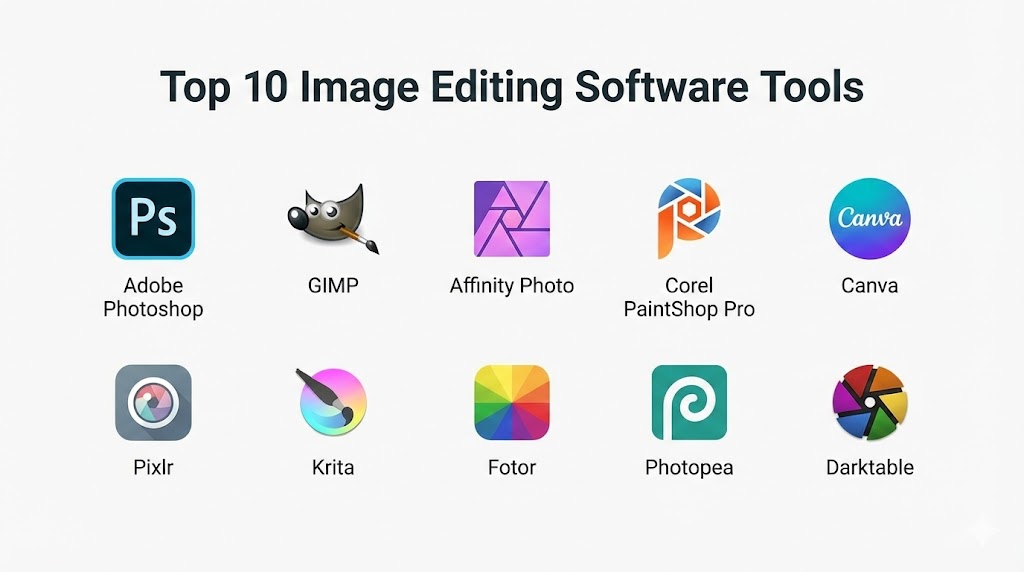
Top 10 Image Editing Software Tools
1 — Adobe Photoshop
Short description:
Adobe Photoshop is an industry-leading image editing software used for professional photo editing, graphic design, and digital art.
Key features:
- Layer-based non-destructive editing
- Advanced retouching and healing tools
- AI-powered selection and background removal
- Smart objects and filters
- Extensive file format support
- Brush and digital painting tools
- Integration with Creative Cloud apps
Pros:
- Unmatched editing depth and precision
- Widely accepted industry standard
- Powerful AI and automation features
Cons:
- Subscription-based pricing
- Steep learning curve for beginners
Security & compliance:
SOC 2, GDPR support, encrypted cloud storage
Support & community:
Extensive documentation, tutorials, forums, enterprise support.
2 — GIMP
Short description:
GIMP is a free and open-source image editing software suitable for advanced photo manipulation and graphic design.
Key features:
- Layer-based editing
- Advanced selection and masking tools
- Custom brushes and plugins
- Scriptable automation
- Wide format compatibility
- Cross-platform support
- Open-source extensibility
Pros:
- Completely free
- Highly customizable
- Active open-source community
Cons:
- User interface less polished
- Limited native AI features
Security & compliance:
Varies / N/A
Support & community:
Community documentation, forums, tutorials.
3 — Affinity Photo
Short description:
Affinity Photo is a professional-grade image editor offering high performance without subscription costs.
Key features:
- Non-destructive editing workflow
- RAW image processing
- Advanced retouching tools
- Live filters and adjustments
- PSD file compatibility
- High-performance rendering
- Cross-platform availability
Pros:
- One-time purchase pricing
- Fast and lightweight
- Professional-quality tools
Cons:
- Smaller plugin ecosystem
- Fewer AI-based features
Security & compliance:
Varies / N/A
Support & community:
Documentation, tutorials, community forums.
4 — Corel PaintShop Pro
Short description:
Corel PaintShop Pro is a Windows-focused image editing solution for photo editing and graphic design.
Key features:
- Layer-based editing
- AI-powered enhancements
- RAW photo editing
- Vector graphic tools
- Batch processing
- HDR and panorama tools
- One-time license model
Pros:
- Affordable one-time purchase
- Rich photo editing features
- Beginner-friendly interface
Cons:
- Windows-only
- Smaller professional adoption
Security & compliance:
Varies / N/A
Support & community:
Corel documentation, user forums, tutorials.
5 — Canva
Short description:
Canva is a web-based design and image editing platform focused on ease of use and template-driven design.
Key features:
- Drag-and-drop editor
- Pre-built design templates
- Background removal tools
- Cloud-based collaboration
- Stock images and icons
- Export for social and print
- AI-assisted design tools
Pros:
- Extremely easy to use
- Ideal for marketing and social media
- No design experience required
Cons:
- Limited advanced editing capabilities
- Requires internet access
Security & compliance:
SOC 2, GDPR compliant
Support & community:
Help center, tutorials, community templates.
6 — Pixlr
Short description:
Pixlr is a lightweight, browser-based image editing tool with AI-powered enhancements.
Key features:
- Layer-based editing
- AI background removal
- Browser and mobile support
- Filters and effects
- Quick retouching tools
- Cloud storage integration
- Free and premium tiers
Pros:
- No installation required
- Fast and intuitive
- Good balance of power and simplicity
Cons:
- Limited offline support
- Advanced features behind paywall
Security & compliance:
Varies / N/A
Support & community:
Online documentation, tutorials.
7 — Krita
Short description:
Krita is an open-source image editor designed primarily for digital painting and illustration.
Key features:
- Advanced brush engine
- Layer and mask support
- Color management tools
- PSD compatibility
- Animation tools
- Tablet and stylus support
- Open-source flexibility
Pros:
- Excellent for digital artists
- Free and open-source
- Active development community
Cons:
- Less suited for photo retouching
- Learning curve for non-artists
Security & compliance:
Varies / N/A
Support & community:
Documentation, forums, tutorials.
8 — Fotor
Short description:
Fotor is an easy-to-use image editor focusing on quick photo enhancement and design.
Key features:
- One-click photo enhancements
- Filters and effects
- Collage maker
- Background removal
- Design templates
- Cloud-based editing
- Mobile and desktop support
Pros:
- Beginner-friendly
- Fast editing workflow
- Good for casual users
Cons:
- Limited professional tools
- Ads in free version
Security & compliance:
Varies / N/A
Support & community:
Help center, tutorials.
9 — Photopea
Short description:
Photopea is a browser-based image editor offering Photoshop-like features.
Key features:
- Layer-based editing
- PSD file support
- Vector and raster editing
- No installation required
- Keyboard shortcuts similar to Photoshop
- Free and premium versions
- Runs entirely in browser
Pros:
- Familiar interface for Photoshop users
- Free access
- Works offline in browser
Cons:
- Performance depends on browser
- Limited advanced automation
Security & compliance:
Varies / N/A
Support & community:
Documentation, online tutorials.
10 — Darktable
Short description:
Darktable is an open-source photography workflow application focused on RAW image processing.
Key features:
- Non-destructive RAW editing
- Color correction and grading
- Tethered shooting support
- Advanced noise reduction
- Lens correction tools
- Batch processing
- Cross-platform support
Pros:
- Free and open-source
- Professional-grade RAW processing
- Non-destructive workflow
Cons:
- Not ideal for graphic design
- Steeper learning curve
Security & compliance:
Varies / N/A
Support & community:
Documentation, forums, tutorials.
Comparison Table
| Tool Name | Best For | Platform(s) Supported | Standout Feature | Rating |
|---|---|---|---|---|
| Adobe Photoshop | Professional editing | Windows, Mac | Industry standard tools | N/A |
| GIMP | Open-source editing | Windows, Mac, Linux | Free advanced editing | N/A |
| Affinity Photo | Pro users without subscription | Windows, Mac, iPad | One-time purchase | N/A |
| PaintShop Pro | Windows photo editing | Windows | Affordable licensing | N/A |
| Canva | Marketing and social media | Web, Mobile | Template-driven design | N/A |
| Pixlr | Quick online editing | Web, Mobile | AI background removal | N/A |
| Krita | Digital art | Windows, Mac, Linux | Brush and painting tools | N/A |
| Fotor | Casual photo editing | Web, Mobile | One-click enhancements | N/A |
| Photopea | Browser-based pro editing | Web | PSD support online | N/A |
| Darktable | RAW photo processing | Windows, Mac, Linux | Non-destructive RAW workflow | N/A |
Evaluation & Scoring of Image Editing Software
| Criteria | Weight |
|---|---|
| Core features | 25% |
| Ease of use | 15% |
| Integrations & ecosystem | 15% |
| Security & compliance | 10% |
| Performance & reliability | 10% |
| Support & community | 10% |
| Price / value | 15% |
Which Image Editing Software Tool Is Right for You?
- Solo users: Photopea, Pixlr, Fotor for quick and accessible editing
- SMBs: Canva, Affinity Photo, PaintShop Pro for marketing and design needs
- Mid-market teams: Photoshop, Affinity Photo, GIMP for flexible workflows
- Enterprises: Adobe Photoshop and Creative Cloud for scalability and collaboration
Budget-conscious users can rely on GIMP, Krita, or Photopea, while premium users benefit from Photoshop’s advanced automation and ecosystem.
Frequently Asked Questions (FAQs)
- What is image editing software?
It is software used to modify, enhance, and create images digitally. - Do I need image editing software for social media?
Yes, tools like Canva and Pixlr simplify creating professional visuals. - Is Photoshop still the best option?
It remains the industry standard but alternatives are strong depending on needs. - Are there free image editing tools?
Yes, GIMP, Krita, Darktable, and Photopea are free options. - Can beginners use professional tools?
Yes, but beginner-friendly tools reduce learning time. - Do these tools support RAW images?
Many, including Photoshop, Affinity Photo, and Darktable, support RAW files. - Is cloud-based editing secure?
Most platforms follow standard security and compliance practices. - Which tool is best for digital painting?
Krita is highly recommended for artists. - Are subscriptions necessary?
Not always; many tools offer one-time licenses. - Can I collaborate using image editors?
Cloud-based tools like Canva support real-time collaboration.
Conclusion
Image editing software is essential for creating visually compelling content across industries. From powerful professional tools like Adobe Photoshop to accessible platforms like Canva and Pixlr, each solution serves different needs. The best image editing software depends on your goals, skill level, budget, and workflow requirements rather than a single universal choice.
Image editing software has become a vital part of modern communication, enabling everything from professional photography to social media graphics. This guide contrasts industry giants like Adobe Photoshop with accessible tools like Canva and open-source options like GIMP, helping you find the right level of creative control for your projects.