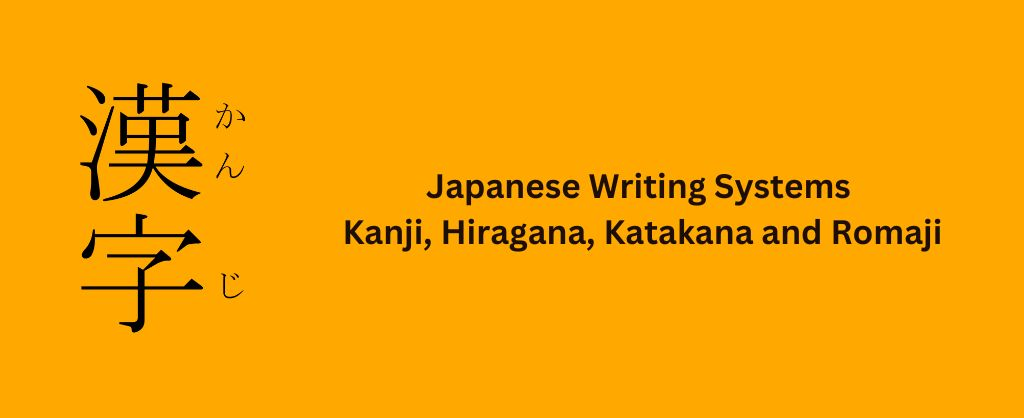
📝 Writing Systems in Japanese
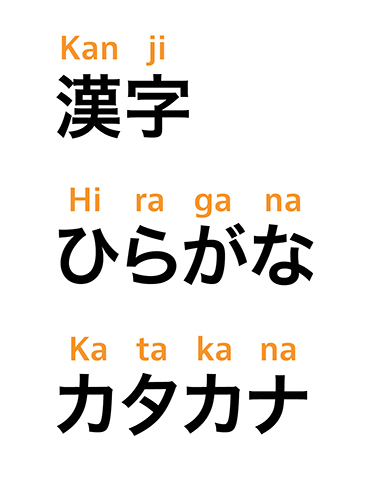
1. Hiragana (ひらがな)
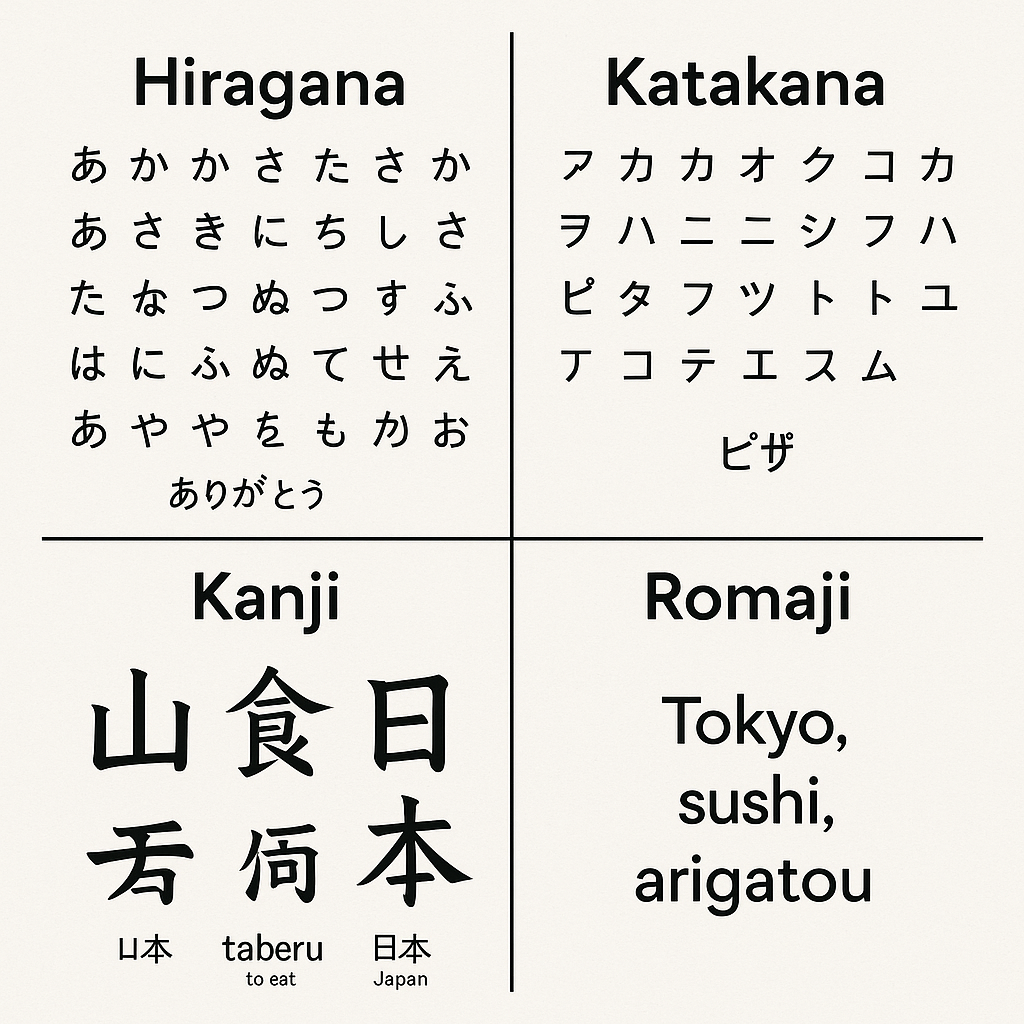
- What it is: A phonetic syllabary with 46 basic characters, each representing a sound (syllable).
- Purpose / Use:
- Grammar endings (verb conjugations, particles).
- Words without kanji, or where kanji is too difficult or uncommon.
- Furigana (small hiragana written above kanji to show pronunciation).
- Example:
- ありがとう (arigatou, thank you)
- ねこ (neko, cat)
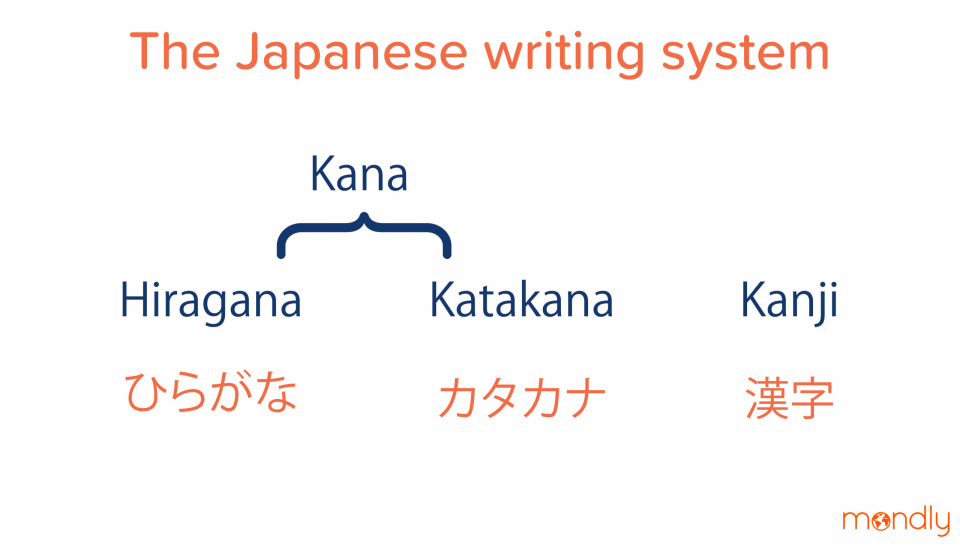
2. Katakana (カタカナ)
- What it is: Another phonetic syllabary with the same 46 sounds as hiragana, but with angular shapes.
- Purpose / Use:
- Foreign loanwords (e.g., コンピュータ → konpyūta → computer).
- Foreign names (e.g., ジョン → Jon → John).
- Onomatopoeia (e.g., ワンワン → wan wan → dog barking).
- Scientific/technical terms, emphasis (similar to italics).
- Example:
- ピザ (piza, pizza)
- バス (basu, bus)
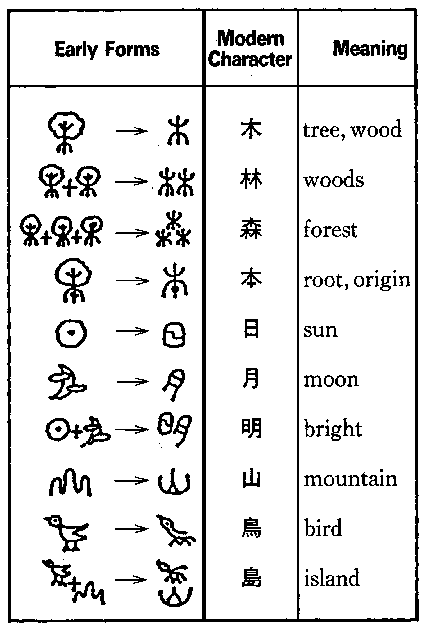
3. Kanji (漢字)
- What it is: Logographic characters borrowed from Chinese. Each kanji represents meaning + usually multiple readings (pronunciations).
- Purpose / Use:
- Nouns, stems of verbs/adjectives, core vocabulary.
- Makes sentences shorter and clearer (avoids long strings of hiragana).
- How many:
- Thousands exist; about 2,000–2,200 (Jōyō kanji) are officially required for literacy.
- Example:
- 山 (yama, mountain)
- 食べる (taberu, to eat)
- 日本 (Nihon, Japan)
4. Romaji (ローマ字)
- What it is: Writing Japanese sounds using the Latin alphabet.
- Purpose / Use:
- For foreigners learning Japanese.
- On road signs, passports, brand names.
- Input method on computers/phones (typing “konnichiwa” → converts to こんにちは).
- Example:
- Tokyo, sushi, arigatou.
⚠️ Not commonly used by native Japanese in daily writing — mainly for learners or international contexts.
📌 How They Work Together
A typical Japanese sentence mixes them:
- Kanji for main words.
- Hiragana for grammar.
- Katakana for foreign terms.
👉 Example:
私はコンピュータを使います。
Watashi wa konpyūta o tsukaimasu.